


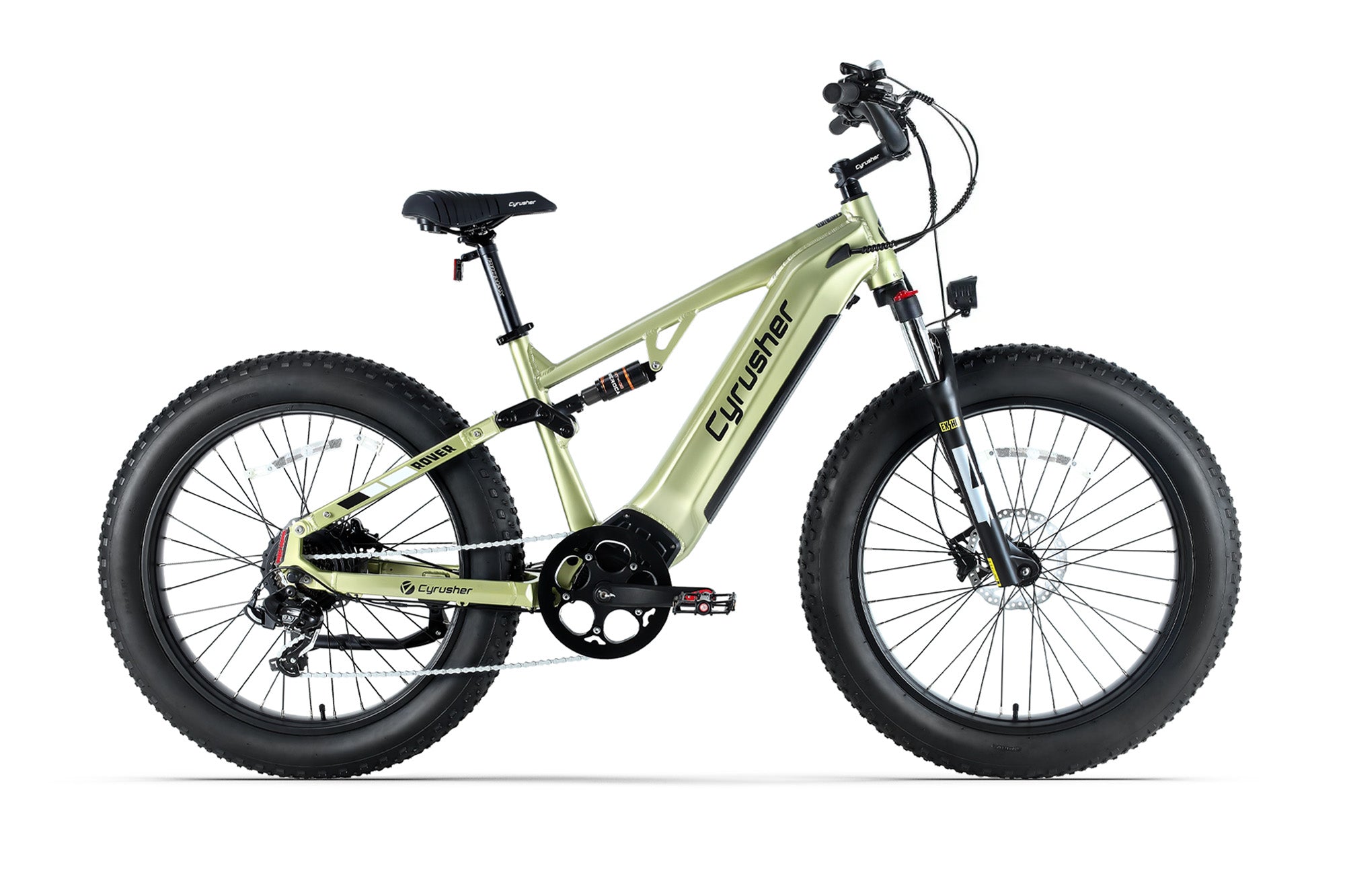
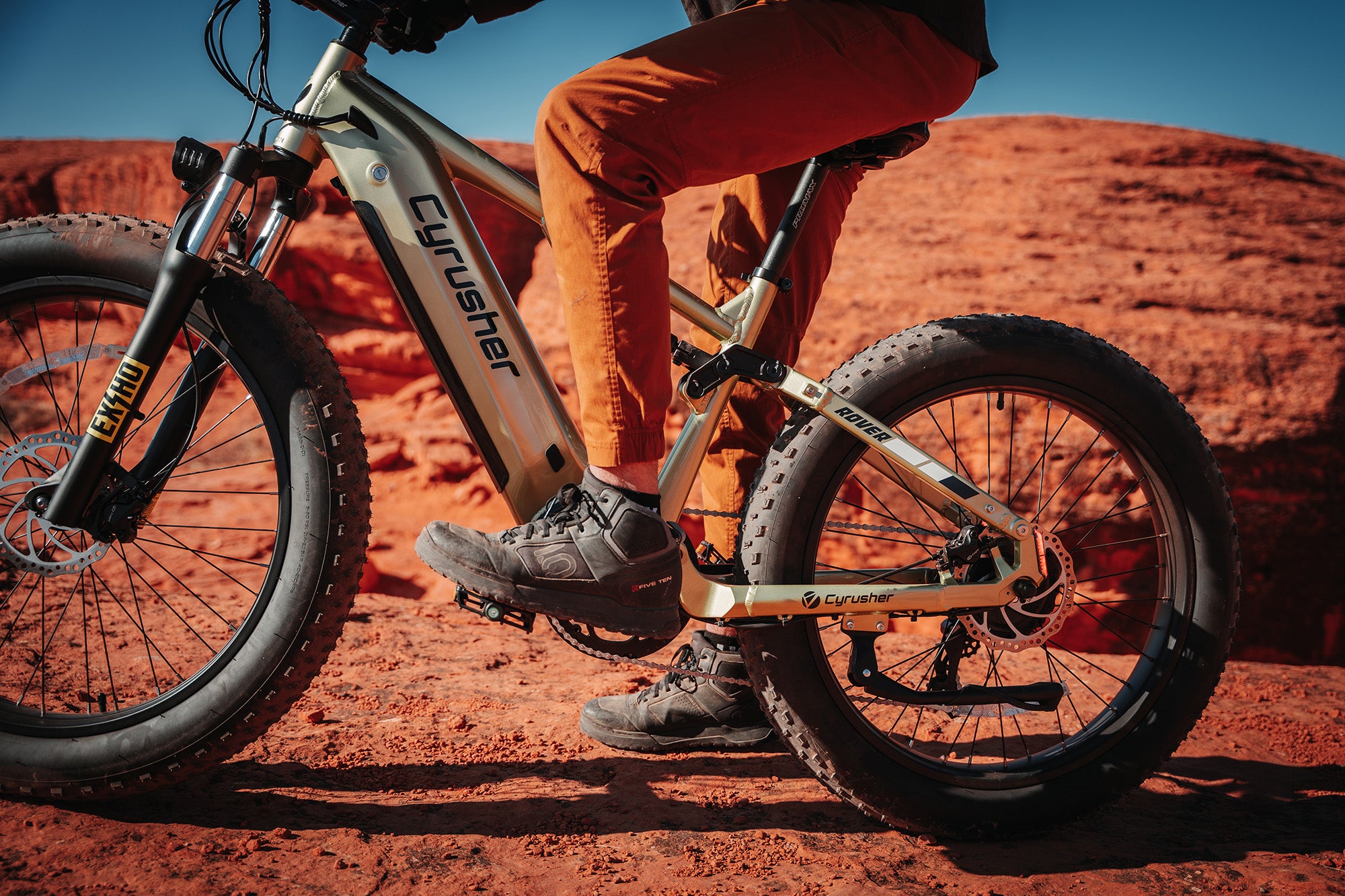
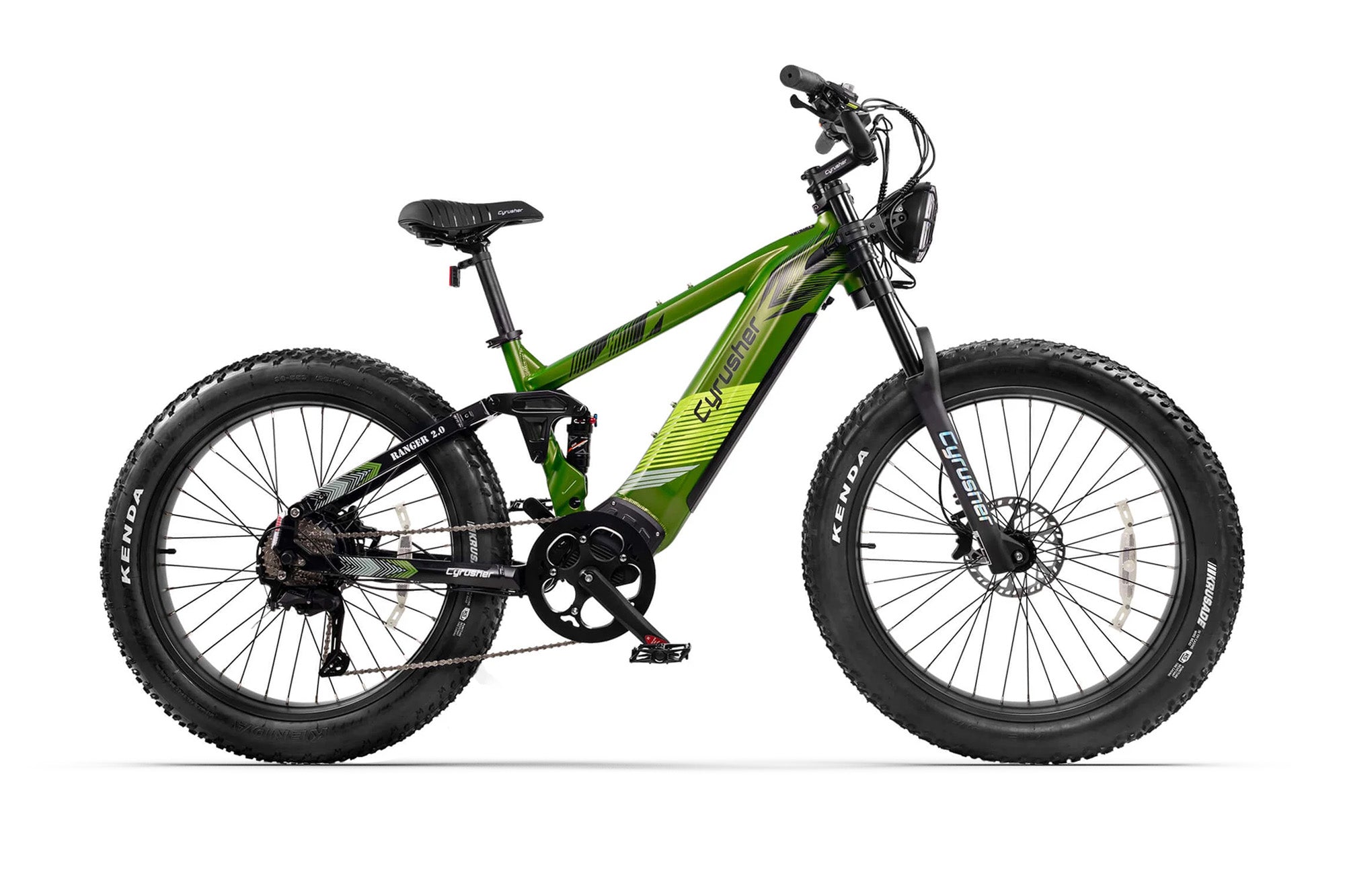

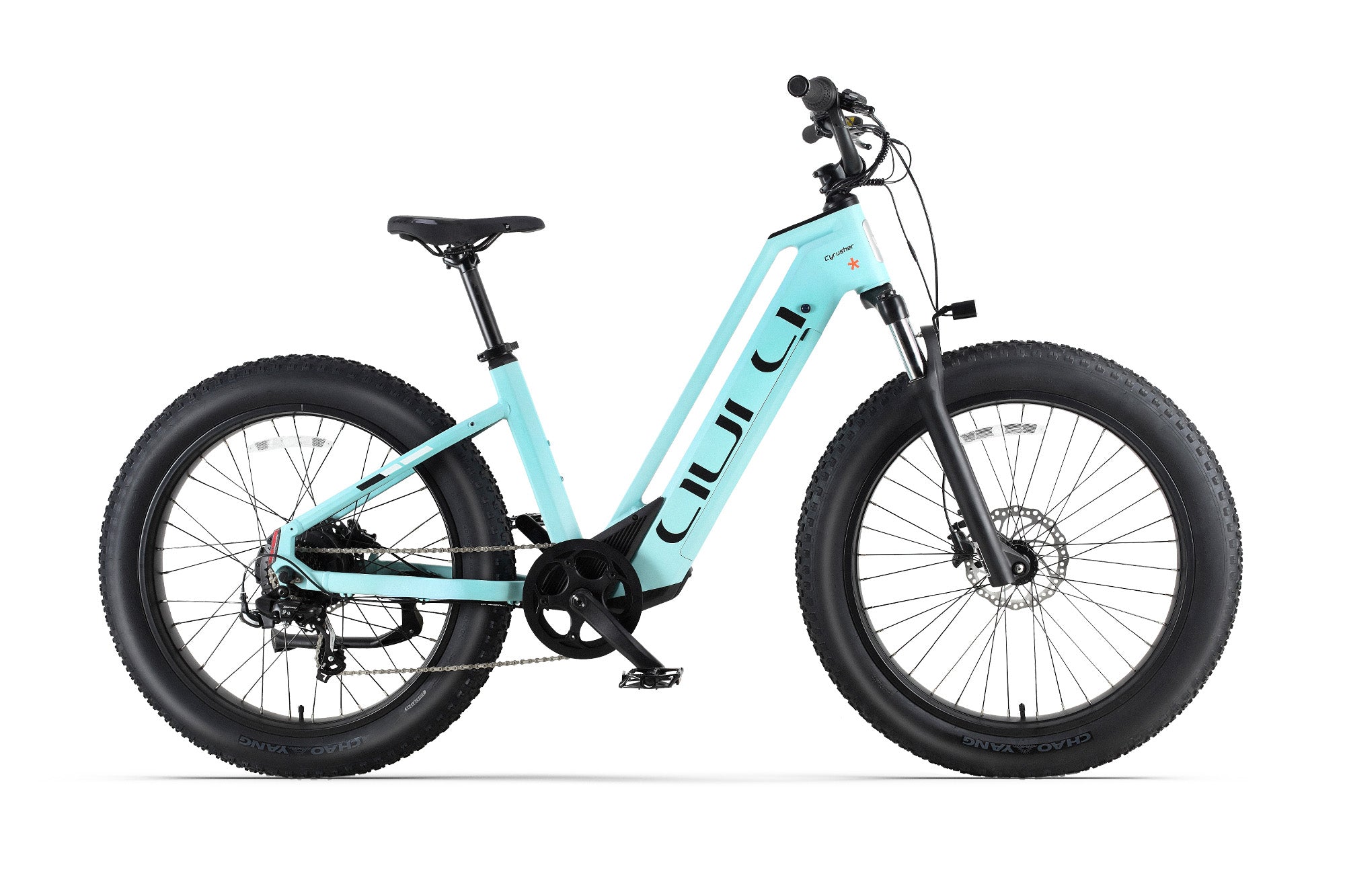



Where will you ride?
Use pavement, gravel, broken roads, paths, or steeper ground to narrow the tire and suspension setup.
Compare bike typesMy road, my call
Find the right Cyrusher electric bike for your road, your distance, and the way you ride. Explore commuter, fat tire, full suspension, step-through, and mountain e-bikes built for everyday routes, mixed surfaces, and longer rides.

Verified safety information
Choose your starting point
Choose by how you ride, how far you go, and the bike setup that feels right for your road.
For daily routes, errands, and comfortable city riding.
Explore commuter e-bikes 2For uneven roads, gravel, paths, and changing surfaces.
Explore full suspension 3For riders who want more room to explore beyond the daily route.
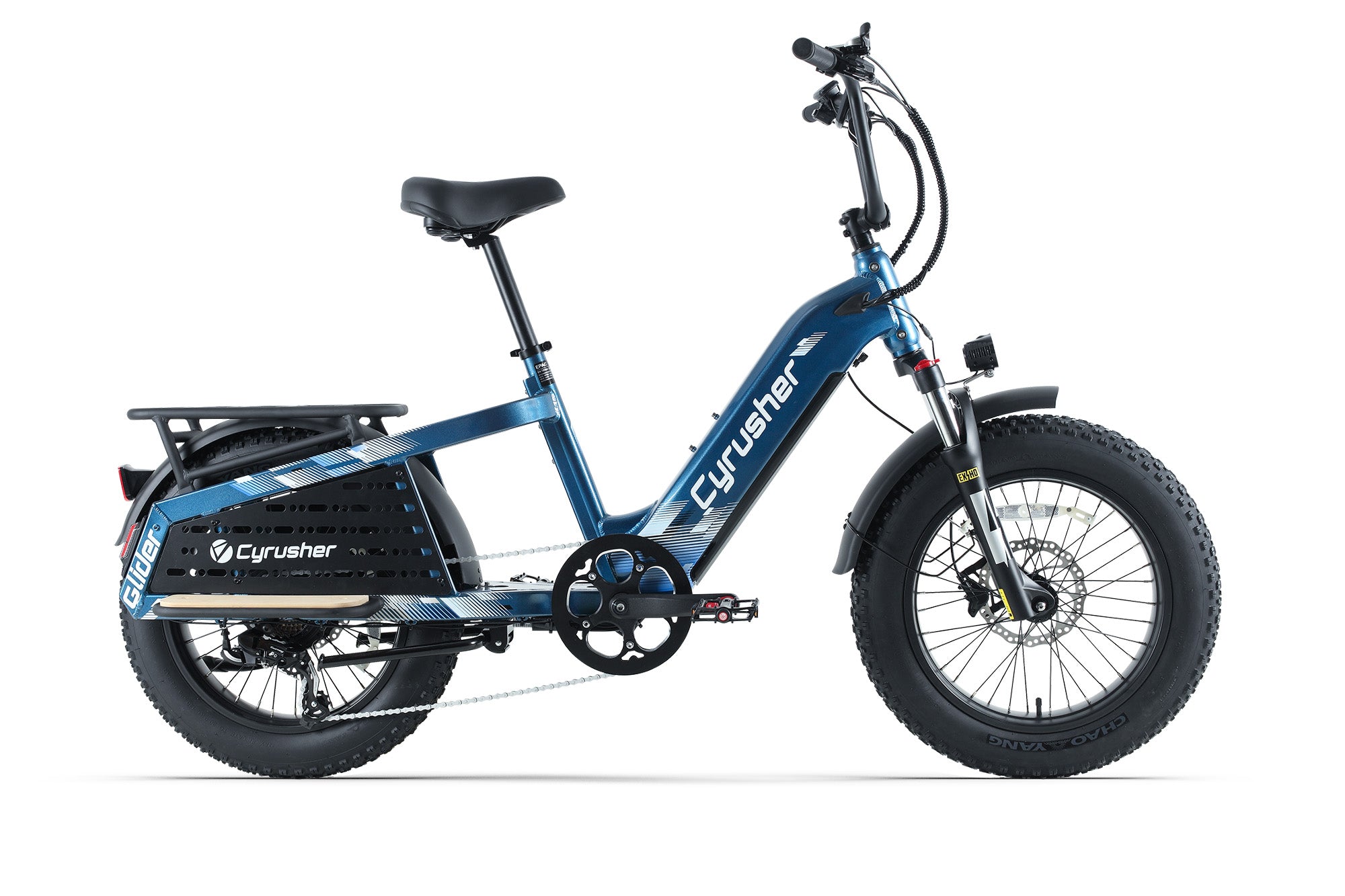
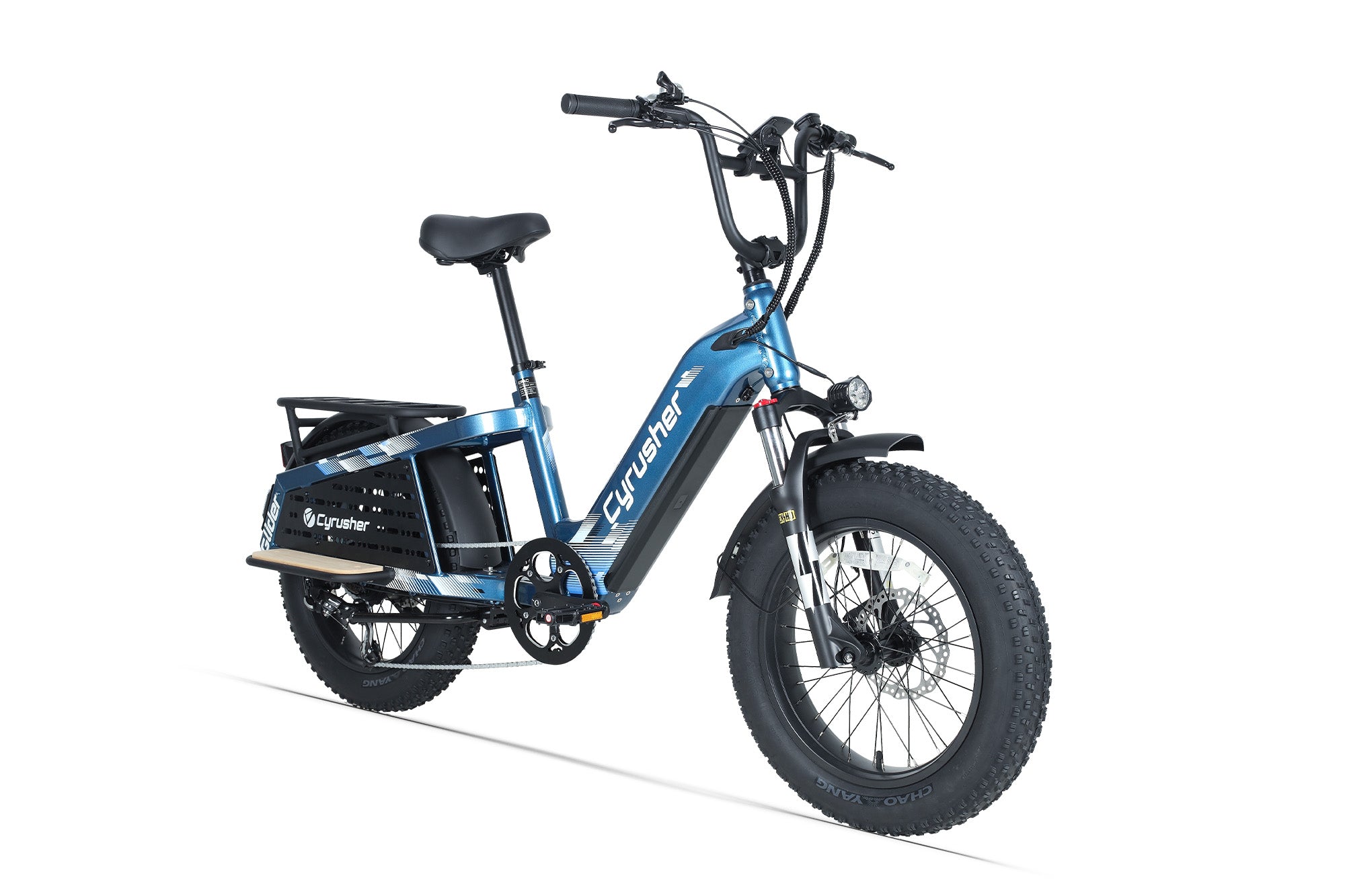
Explore full suspension e-bikes 4For practical trips, family gear, and utility-focused riding.
View the Glider cargo e-bikeExplore current models published in the 50–59 mile range category.
View 50–59 mile models 2Compare current models published in the 60–69 mile range category.
View 60–69 mile models 3Explore current models with a published range category over 70 miles.
View longer-range models 4Use range as a comparison point, then account for rider weight, terrain, weather, assist level, tire pressure, and stops.
Compare all modelsWider tires for a larger contact patch on pavement and mixed surfaces.
Explore fat tire e-bikes 2A lower frame opening for easier mounting and frequent stops.
Explore step-through e-bikes 3Front and rear suspension for repeated bumps and rougher ground.
Explore full suspension 4Practical models for regular routes, errands, and city riding.
Explore commuter e-bikesOne Bike.Every Purpose.
Full Suspension. Full Control.
Go Where The Road Ends.
Long-Range Power. Flagship Comfort.
Stylish Comfort, Fat Tire Confidence.
Bold Power, Stronger Stance.
Relaxed Riding, Ready To Roam.
Urban Comfort, Done Smarter.
Carry More, Ride Easier.
Compact Form, Premium Capability.
Ride the Everyday. Explore the Unexpected.
Compare current models
Compare the current frame, range, motor, suspension, and intended use before opening the full model details.
| Model | Best for | Frame | Suspension | Range | Motor | Price |
|---|---|---|---|---|---|---|
| Kommoda 3.0 | Comfort and easy access | Step Thru | Full | 68 Miles | 750W | |
| Trax | Step-through all-terrain riding | Step Thru | Full | 75 Miles | 750W | |
| Ranger 2.0 | Longer all-terrain rides | Step Over | Full | 75 Miles | 750W | |
| Aura | Commuting and weekend rides | Step Thru | Front | 60 Miles | 750W | |
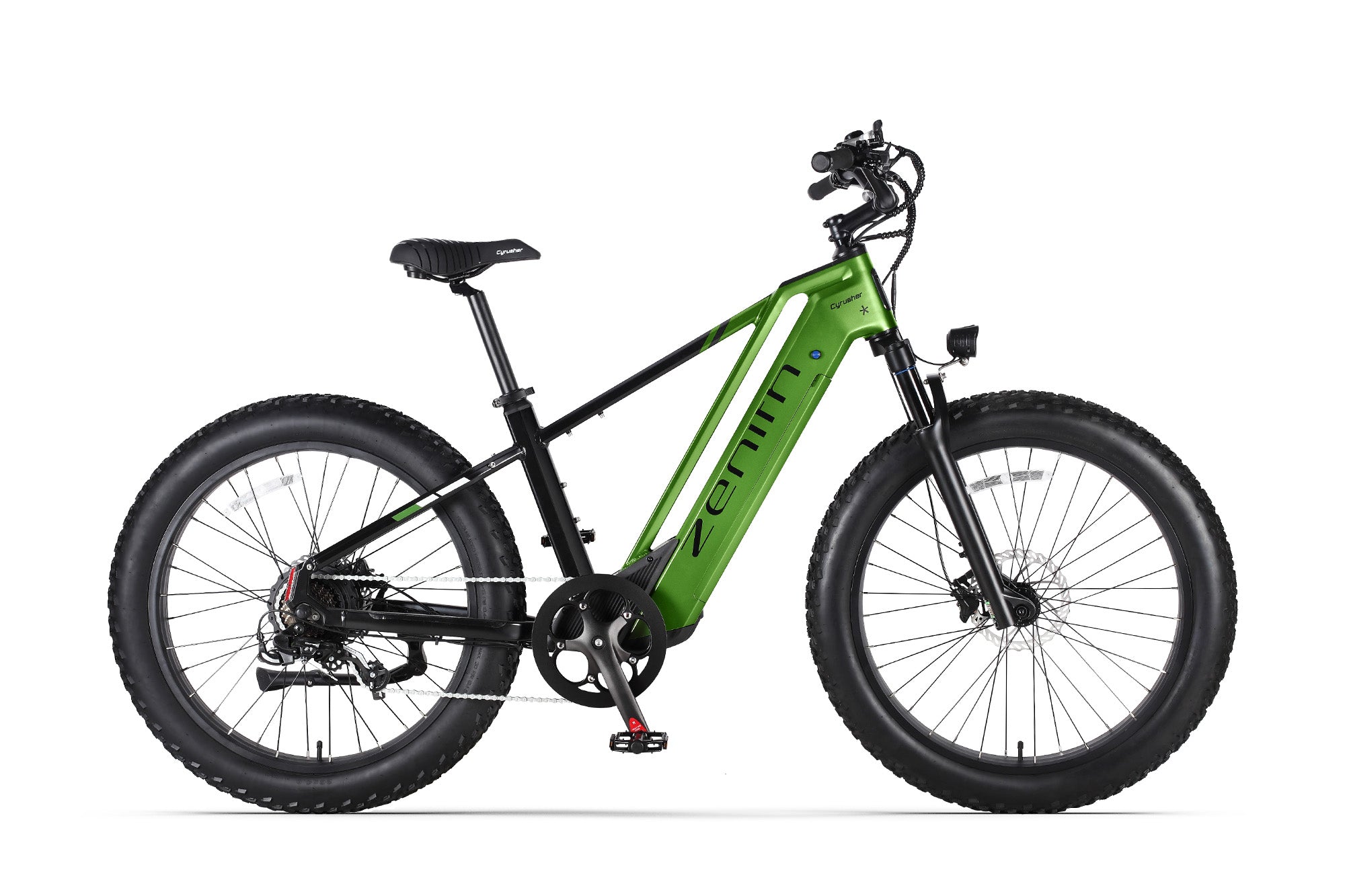
| Zenith | Trails and city riding | Step Over | Front | 60 Miles | 750W | |
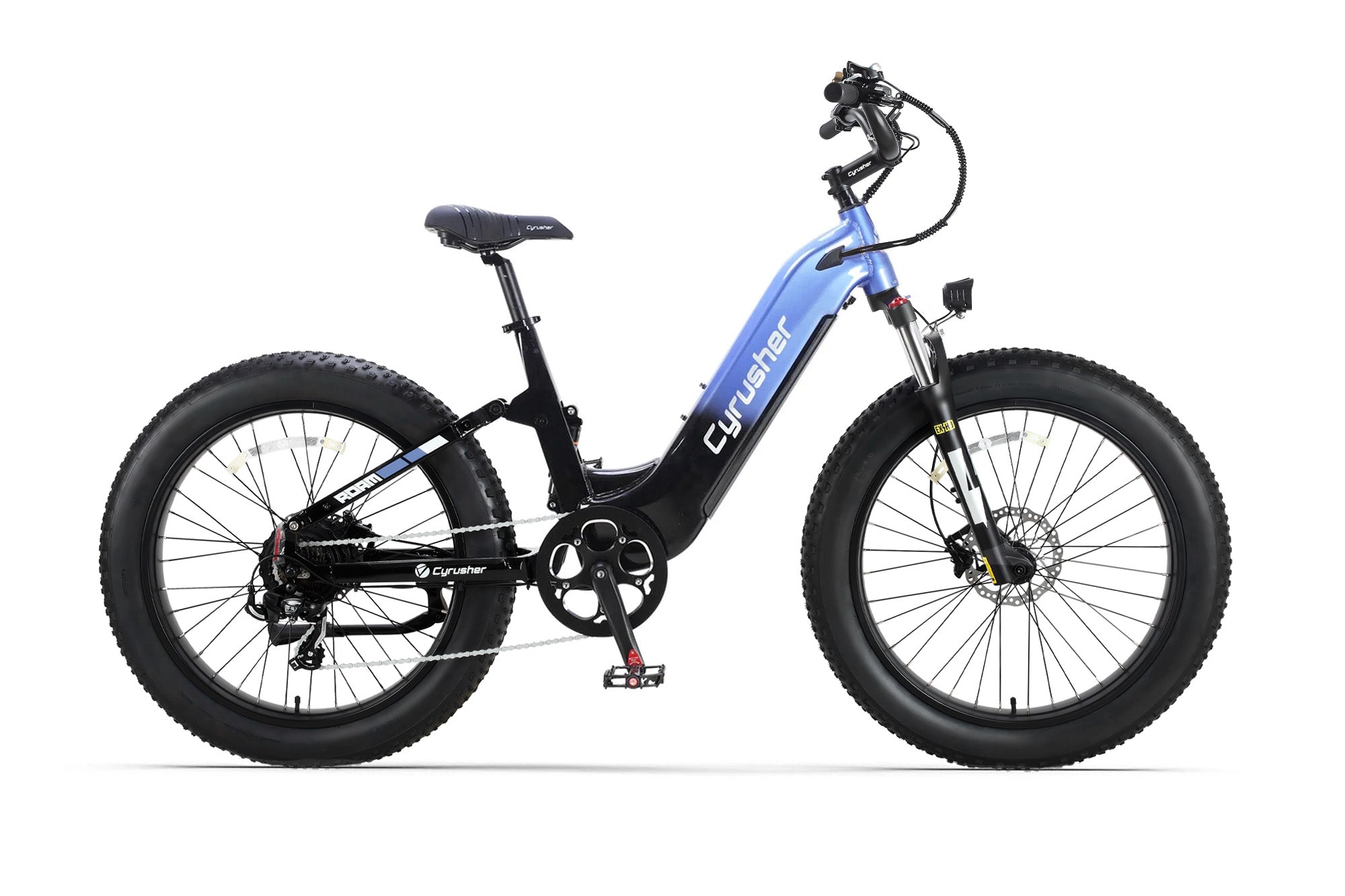
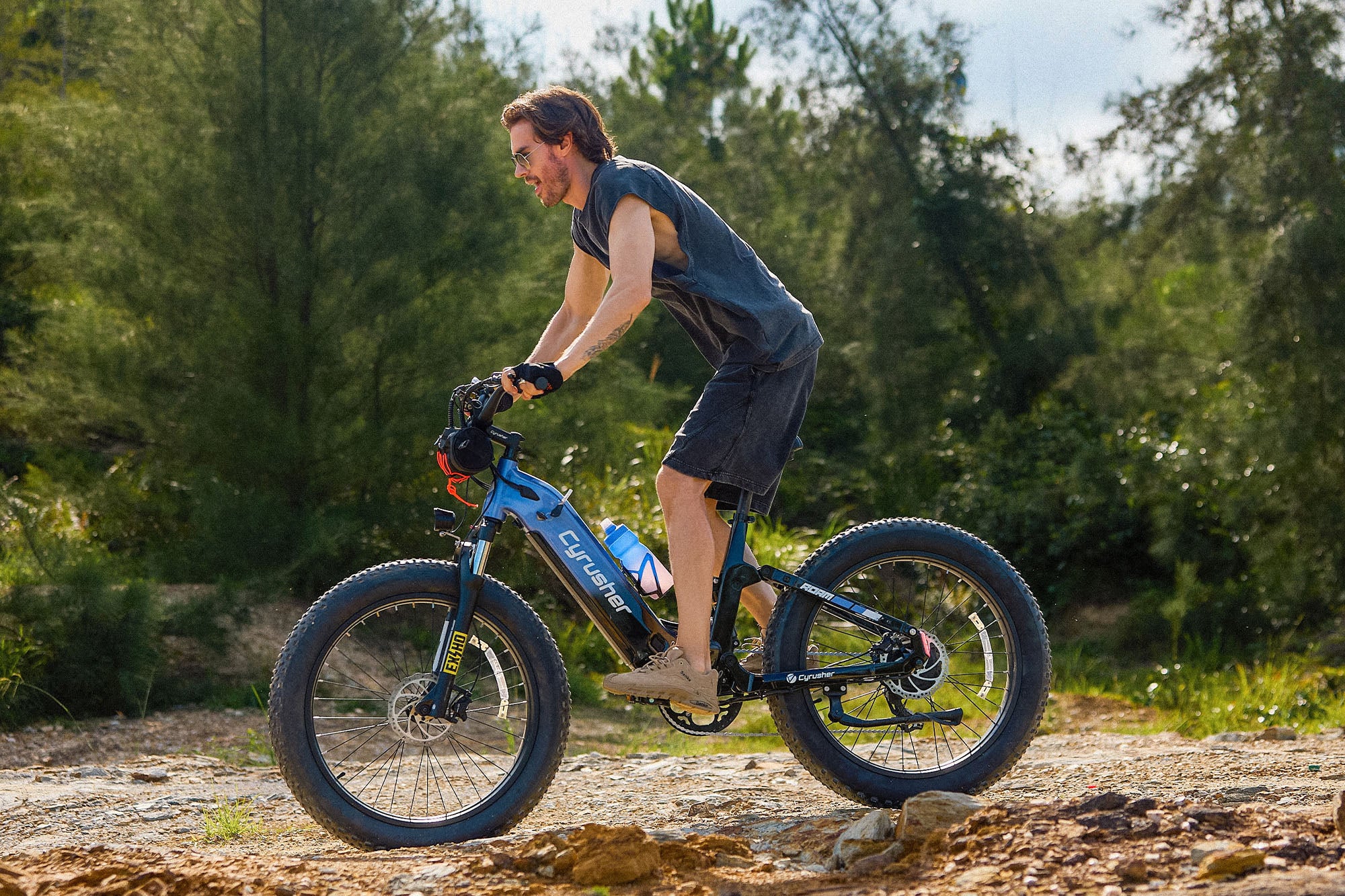
| Roam | Comfort on mixed terrain | Step Thru | Full | 62 Miles | 750W | |
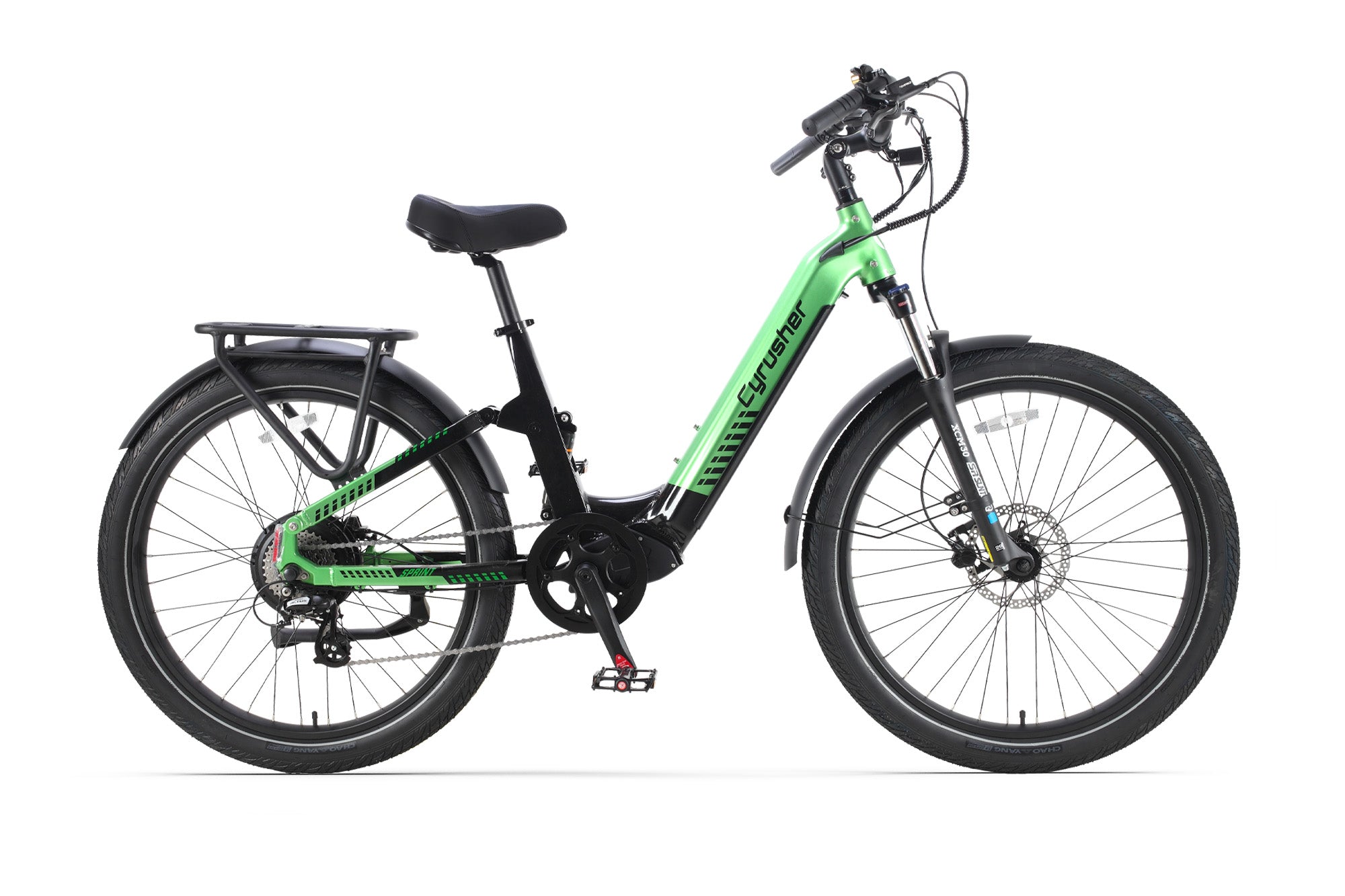
| Sprint | Comfortable city commuting | Step Thru | Full | 60 Miles | 750W | |
| Glider | Cargo, family and errands | Step Thru | Front | 62 Miles | 750W | |
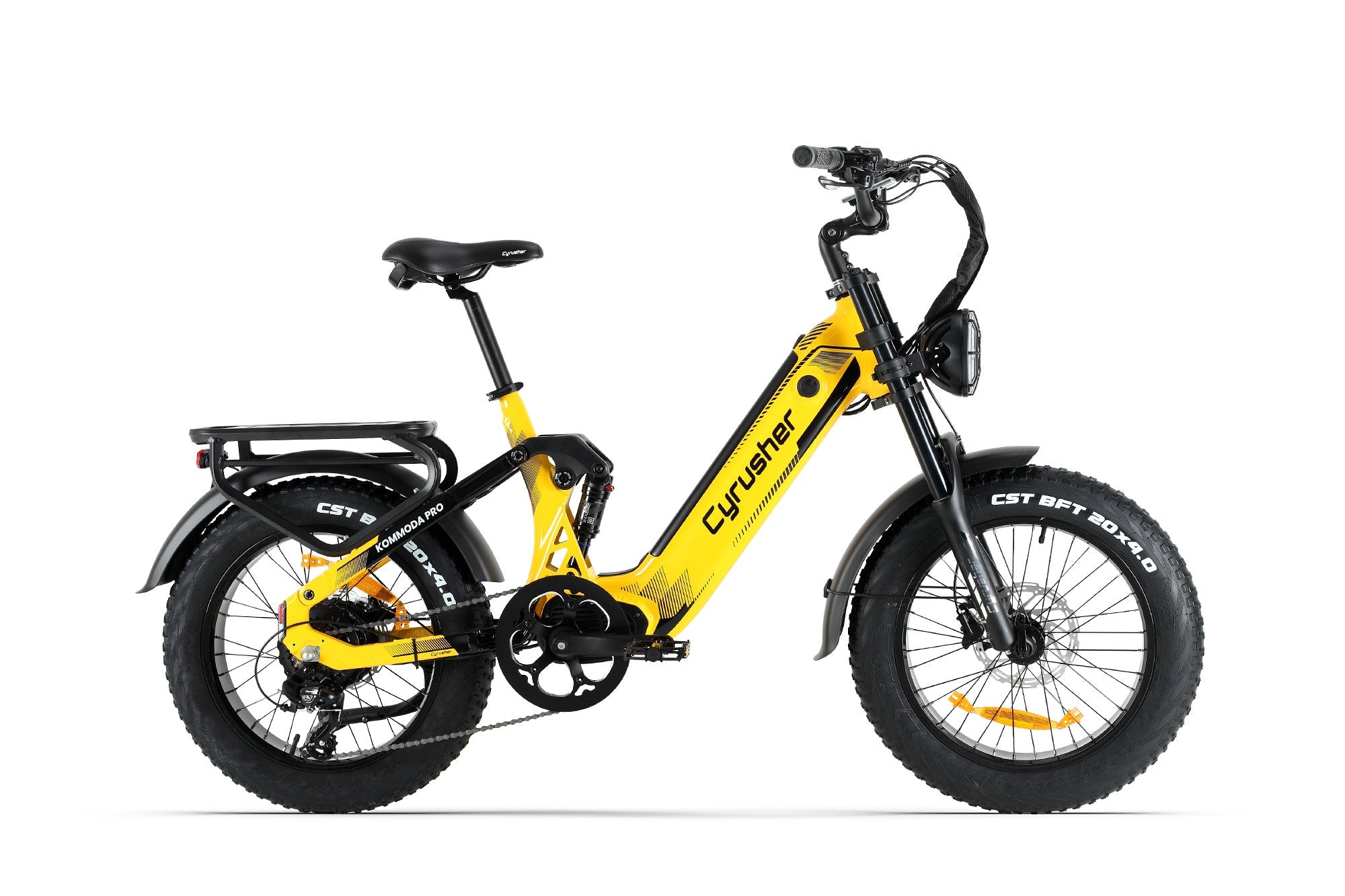
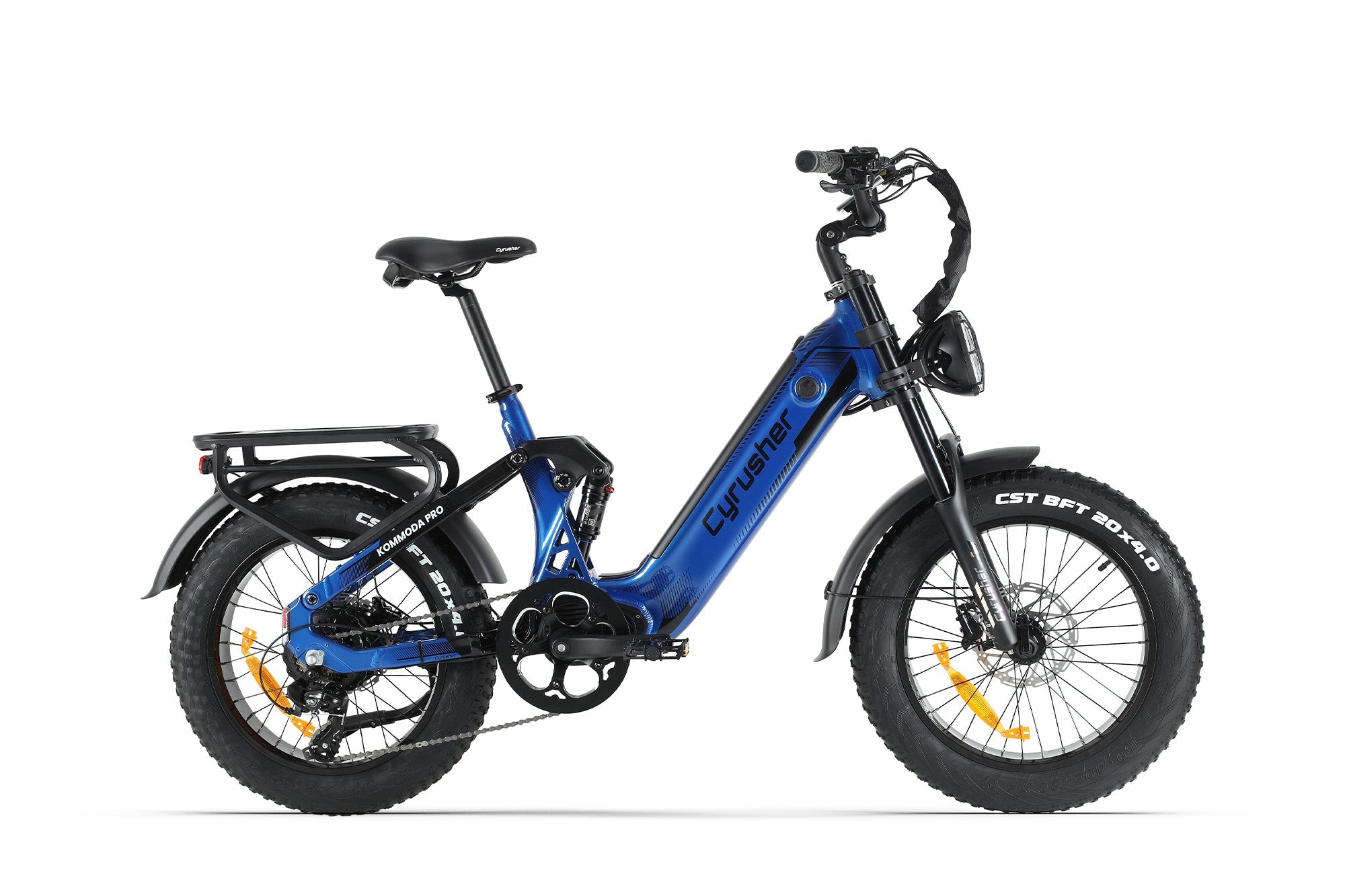
| Kommoda Pro | City-to-trail versatility | Step Thru | Full | 68 Miles | 750W | $1,899.00 |
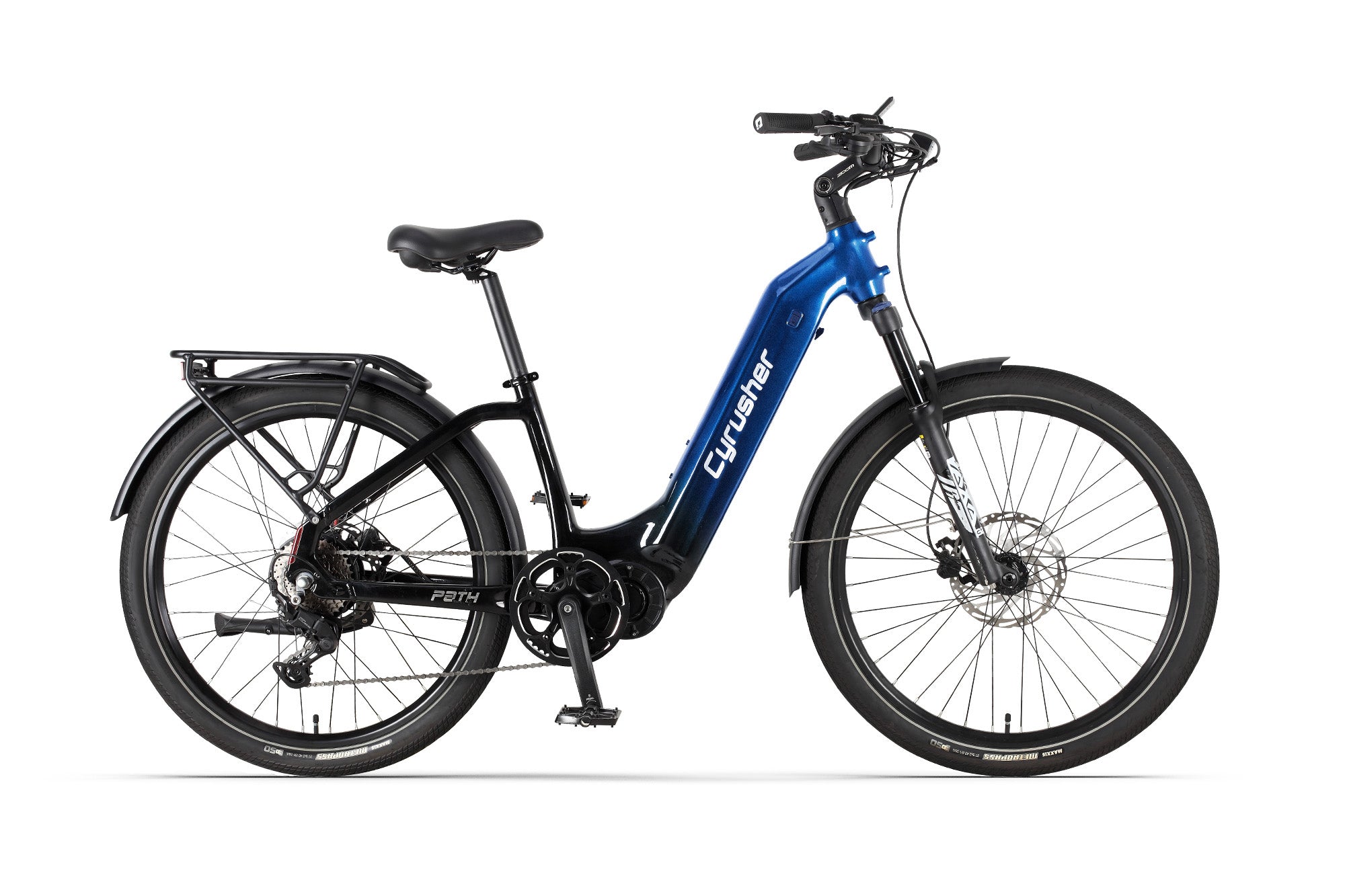
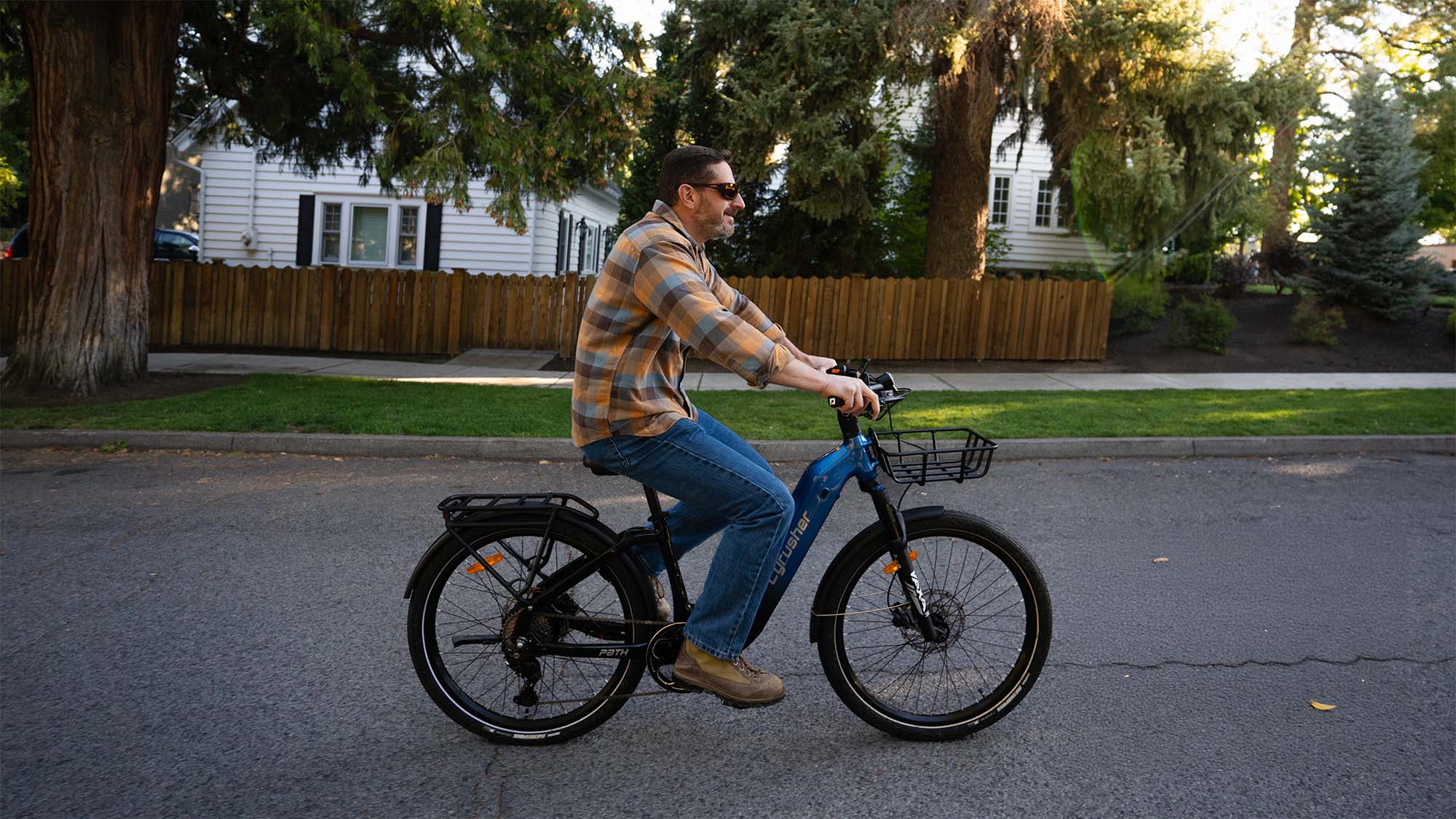
| Path | Practical city trips | Step Thru | Front | 60 Miles | 750W |
Published specifications are comparison points, not guarantees. Real-world range varies with rider and cargo weight, terrain, temperature, wind, tire pressure, assist level, stops, and throttle use. Confirm current details on each product page.
Start with your real route
Start with the road you ride most often, then compare distance, frame access, tires, suspension, payload, storage, and support.
Use pavement, gravel, broken roads, paths, or steeper ground to narrow the tire and suspension setup.
Compare bike typesCompare published range, then allow for load, hills, wind, temperature, stops, assist level, and throttle use.
Compare rangeA lower opening can simplify mounting. A higher frame may suit riders who prefer a traditional bike shape and position.
Compare step-through modelsFull suspension can help manage repeated bumps. Confirm the current fork and rear suspension details on the model page.
View full suspensionCheck the full payload limit against rider weight, cargo, bags, child seats, and compatible accessories.
View the GliderBike weight, wheelbase, tire width, stairs, racks, and vehicle carriers matter before the first ride.
Read model specificationsOwner feedback, at the source
These comments come from current Judge.me reviews on Cyrusher product pages. Follow each card to see the original review and the latest owner feedback.
Hefty, yet nimble and well balanced.Zachary Taylor — Rover owner, March 2025 Read the original review ★★★★★
Used it in western Washington on logging roads, and I’m very happy with it.Jason Robichaud — Rover owner, February 2025 Read the original review ★★★★☆
The instructions in the manual were out of date; however, a phone call sorted out any issues.Mark Dunham — Roam owner, December 2025 Read the original review
Before you choose
Direct answers for comparing the current Cyrusher range. Check the linked product or policy page for the latest details.
It depends on your route. For smooth pavement, the city line — Sprint and Path — runs lighter frames (from about 70 lb) on 27.5″ tires that roll faster than fat tires; the Path pairs a 750W motor with up to 60 miles of range. If you want city practicality with fat-tire cushioning, the step-through Luxe rides on 20×4″ fat tires and is rated up to 70 miles. If your commute includes potholes, gravel shortcuts, or comfort is the priority, the Kommoda 3.0 is our most-ridden commuter: step-through frame, full suspension, a torque sensor for natural pedal feel, and up to 68 miles from its 48V 20Ah battery. For long commutes of 15+ miles each way, the Ranger 2.0 (step-over) and Trax 2.0 (step-through) carry our largest battery, 52V 20Ah, rated up to 75 miles. All assist up to 28 mph, so you can keep pace with city traffic.
Explore commuter e-bikesTire width — and everything that follows from it. Cyrusher fat-tire models run 4-inch tires (20×4″ or 26×4″) at low pressure, adding grip and cushioning on sand, snow, gravel, and broken pavement; the tire itself absorbs bumps before the suspension even starts working. The trade-offs are weight (our fat-tire bikes run 66–92 lb) and higher rolling resistance. City-oriented models like the Sprint (27.5×2.6″) and Path (27.5×2.4″) run narrower tires and weigh roughly 70–78 lb, so they accelerate easier, roll more efficiently, and are simpler to carry or store. Rule of thumb: if more than about 20% of your riding leaves smooth pavement — or comfort on rough streets matters most — choose fat tires. If it's pavement all the way, choose the city line.
Explore fat tire e-bikesCompare two numbers: on the step-through Kommoda 3.0 you step over a 14.6″ frame; on the step-over Ranger 2.0, a 28″ top tube. That difference decides it. Choose step-through if you have hip or knee limitations, stop frequently in traffic, ride in everyday clothes, or simply don't want to swing a leg over an 80 lb bike — most of our current lineup is step-through, including the full-suspension Trax 2.0, which shares its platform with the Ranger 2.0, so you no longer trade performance for easy mounting. Choose step-over (Ranger 2.0, Rover, Cyclone X) if you're taller — the Ranger fits riders 5′7″–6′6″ — and want the stiffer frame triangle for aggressive off-road riding.
Compare step-through modelsMost of them — it's a Cyrusher signature. The Kommoda 3.0, Roam, Rover, Trax 2.0, and Ranger 2.0 all pair a suspension fork with a real rear shock. The Kommoda 3.0 runs a motorcycle-style oil-spring fork plus a rear air shock; the Ranger 2.0 uses a dual-crown hydraulic fork with lockout (60 mm travel) and a DNM AO-38RC air shock — both adjustable to your weight. Combined with 4″ tires, this is why riders with back, wrist, or joint sensitivity end up on a Cyrusher. Every product page lists "Front Fork" and "Rear Suspension" as separate spec lines, so you can verify exactly what each model carries before you buy.
Explore full suspension modelsCompare watt-hours, not headline miles. Multiply voltage by amp-hours: the Kommoda 3.0's 48V 20Ah battery holds 960 Wh (rated up to 68 miles); the Ranger 2.0's 52V 20Ah holds 1,040 Wh (up to 75 miles). Advertised maximums — ours included — are measured at low pedal-assist with a light rider on flat ground. Real range depends on assist level, throttle use, rider weight, hills, wind, temperature, and tire pressure. Honest rule of thumb: expect the advertised maximum at low PAS, and roughly half of it riding throttle-heavy. Cold weather can temporarily cut range another 15–30%. A torque sensor (standard on the Kommoda 3.0 and Ranger 2.0) stretches range further, because power follows your pedal pressure instead of running flat-out.
Compare current modelsNo — the current lineup has no folding frame, and we'd rather tell you that directly than sell you a workaround. If storage or transport is the real concern, three models use compact 20″ wheels — the Kommoda 3.0, Kommoda Pro, and Glider — with quick-drop seatposts and the smallest footprints in our range, and our foldable car rack is built to carry fat-tire e-bikes on a standard hitch. But if a true folding frame is a hard requirement — apartment elevators, RV storage, train commutes — we currently don't make the right bike for you. That honesty matters more to us than the sale.
Browse current electric bikesWarranty: 2 years on the frame, motor, and controller; 1 year on the battery, hydraulic brakes, suspension fork and shock, display, sensors, charger, and most other components — for the original owner, with normal wear items (tires, brake pads, chains) excluded. Claims go through a support ticket answered within 48 hours, and instead of waiting on shipped parts, Cyrusher can authorize up to $200 for repairs at your local bike shop. Returns: every e-bike comes with a 30-day return window from the delivery date. Start with a return authorization (RMA) through our support team before shipping anything back — current conditions and any applicable fees are listed on the Return Policy page. If anything arrives damaged, photograph it and report it as soon as you unbox — ideally within 72 hours. Full warranty terms: Warranty Policy.
Read the warranty policyTwo different certifications covering two different things. UL 2849 certifies the complete electrical drive system — motor, controller, wiring, and charging circuitry — against fire and electrical hazards. UL 2271 certifies the lithium-ion battery pack itself. Current Cyrusher models such as the Kommoda 3.0 carry both, and each product page states its certification in the Safety section. Why it matters: New York City and a growing number of buildings and insurers now require UL-certified e-bikes, and certification is your assurance that the battery charging in your garage was tested to the recognized US standard. When comparing brands, ask to see the certificate — "UL-tested" and "UL-certified" are not the same thing.
View applicable modelsMy road, my call
Compare bike types, read the current specifications, or speak with the US support team before you decide.