


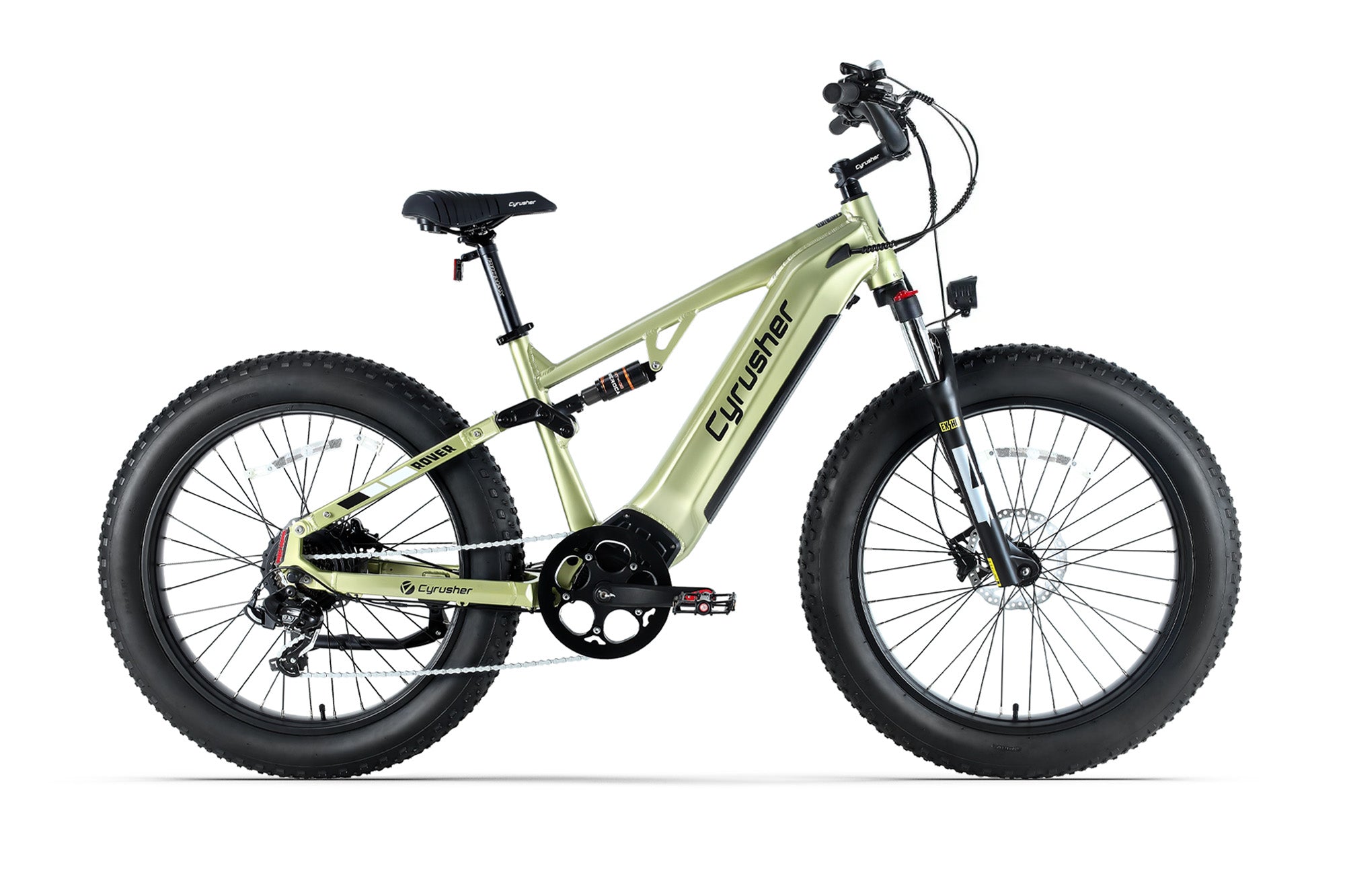
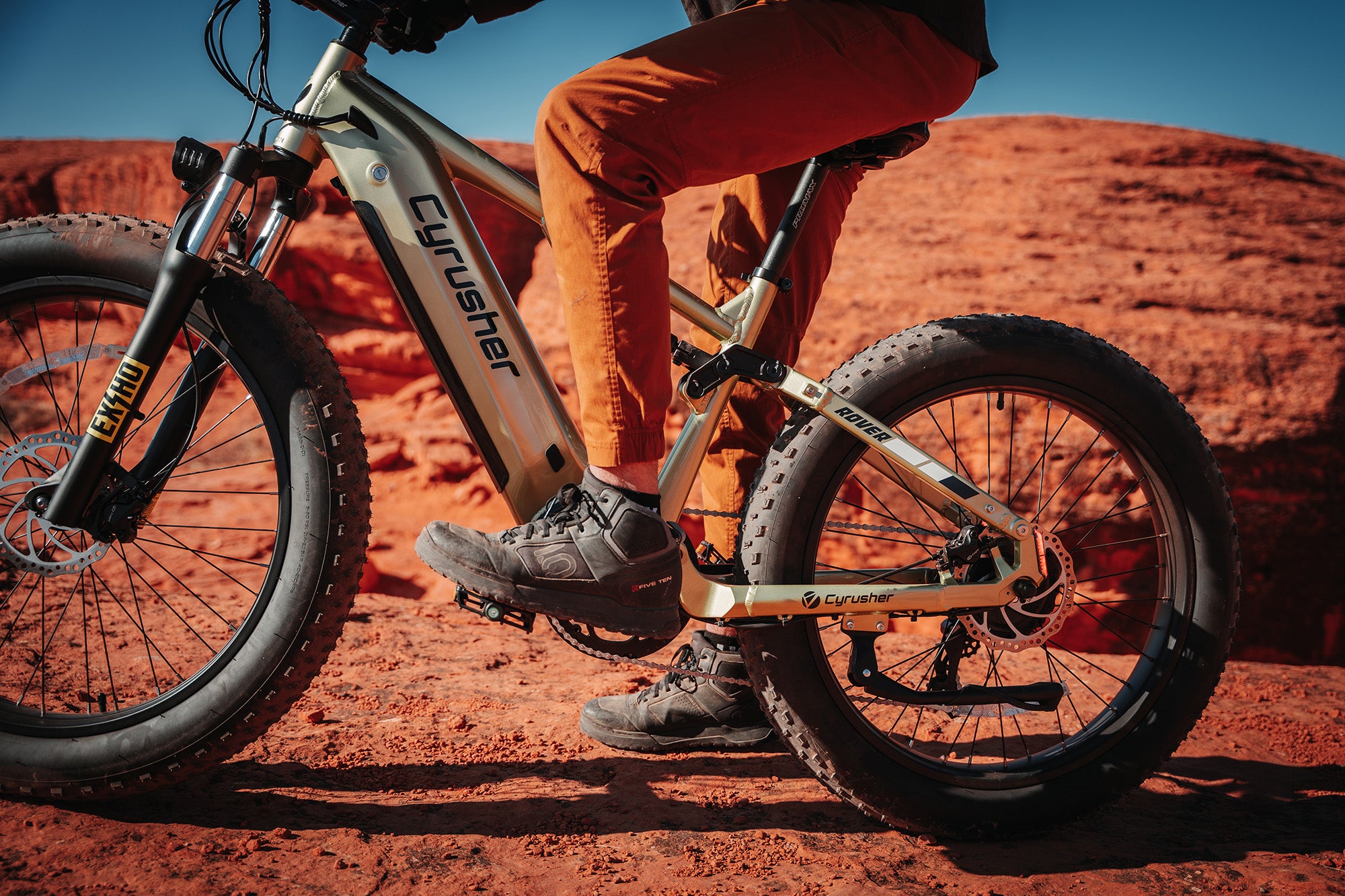
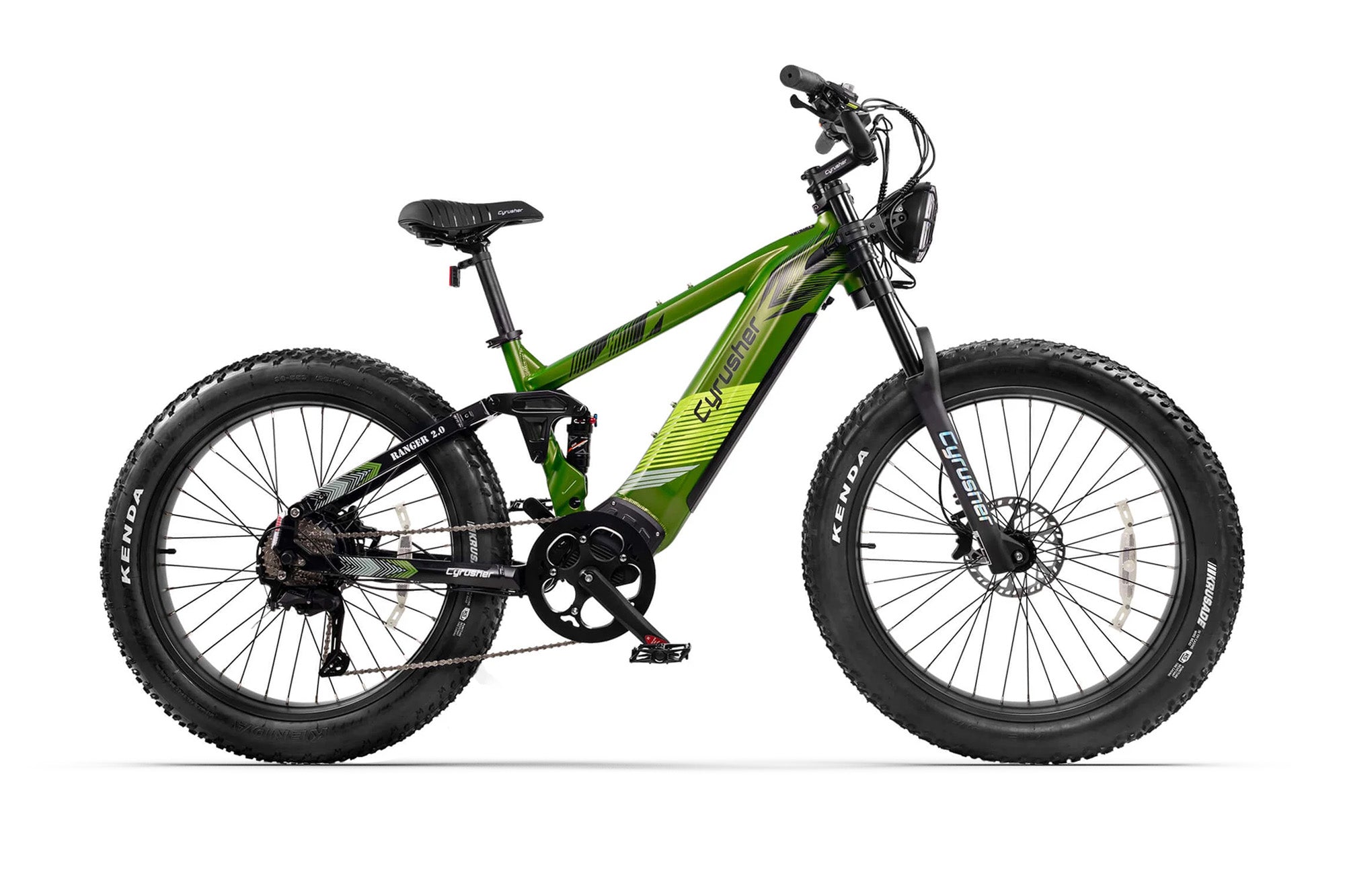

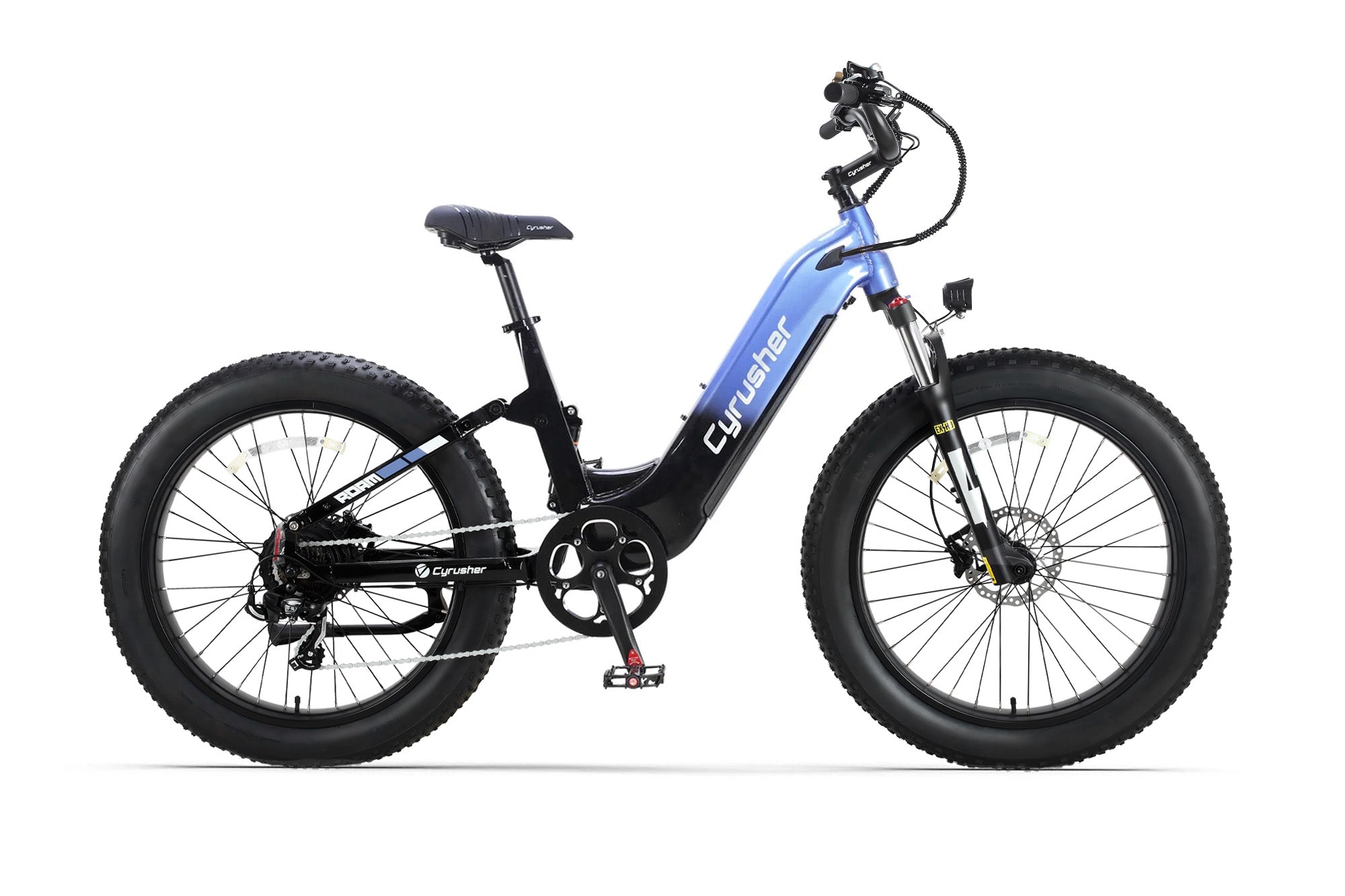
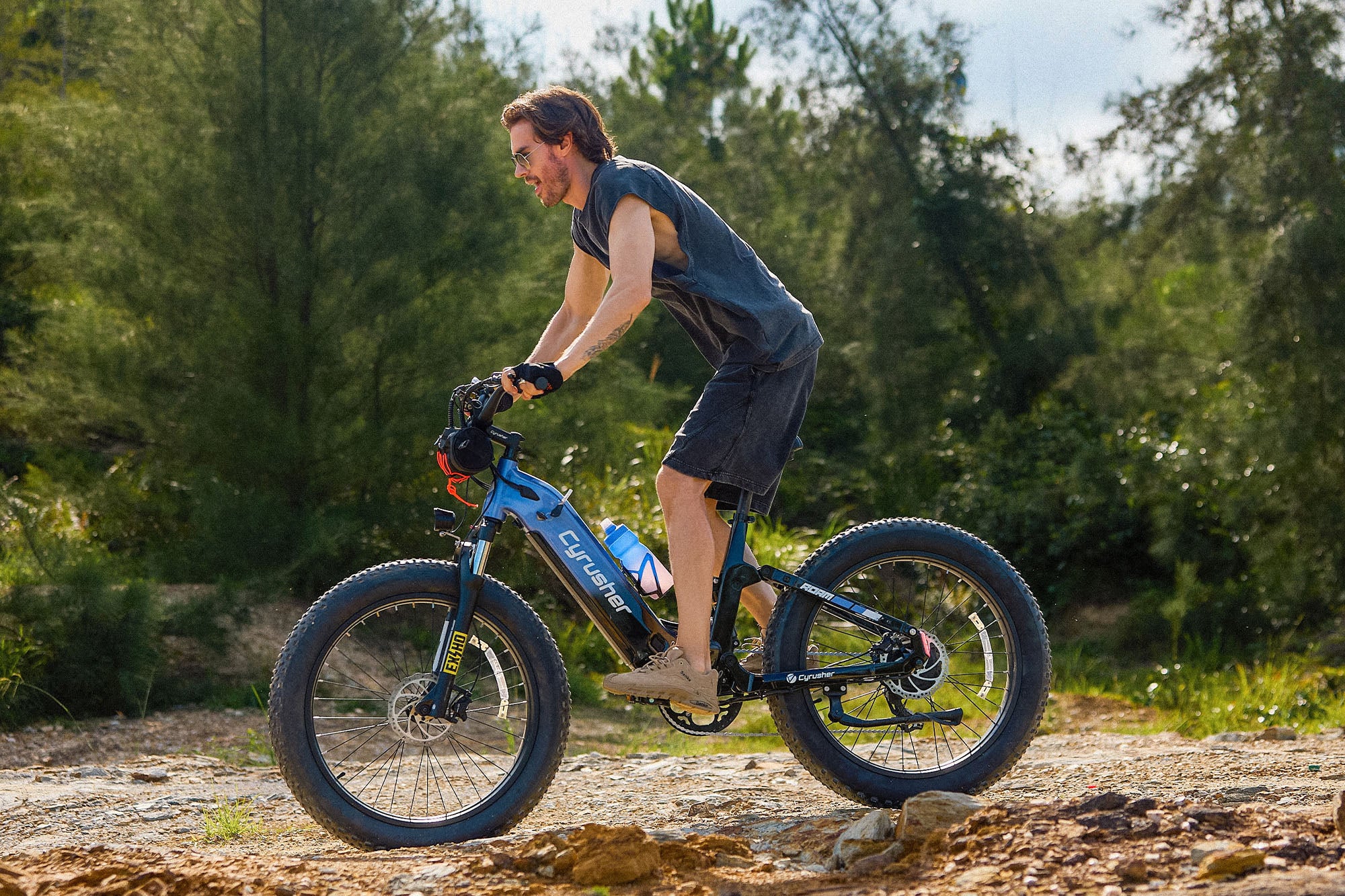

Front suspension
Helps soften impacts at the front wheel and reduce harshness through the handlebar.
Comfort on rough roads
More comfort on rough pavement, gravel, and paths. Choose the bike that fits your ride.
Compare frame style, rider height, weight, range, motor, and payload before you buy.

Start with how you ride
Choose the surface or ride that matters most, then compare the bikes that fit.
Take the edge off broken streets, paths, and crossings.
See the comfort setup 2More traction and control on firm, uneven ground.
See surface guidance 3Compare battery range and comfort for rides that last.
Plan for real range 4Stable handling for commutes, errands, and weekend rides.
Start with the fitOne Bike.Every Purpose.
Full Suspension. Full Control.
Go Where The Road Ends.
Long-Range Power. Flagship Comfort.
Relaxed Riding, Ready To Roam.
Urban Comfort, Done Smarter.
Compact Form, Premium Capability.
Decision details, side by side
There is no single best bike. Compare the setup that matches your roads, body, load, and routine.
| Model | Best for | Frame | Suspension | Range | Motor | Weight | Payload | Rider fit | Price |
|---|---|---|---|---|---|---|---|---|---|
| Kommoda 3.0 | Comfort and easy access | Step Thru | Full | 68 Miles | 750W | 83 lbs | 350 lbs | 4'9"–6'3" | |
| Trax | Step-through all-terrain riding | Step Thru | Full | 75 Miles | 750W | 87 lbs | 350 lbs | 5'7"–6'6" | |
| Ranger 2.0 | Longer all-terrain rides | Step Over | Full | 75 Miles | 750W | 87 lbs | 350 lbs | 5'7"–6'6" | |
| Roam | Comfort on mixed terrain | Step Thru | Full | 62 Miles | 750W | 81.6 lbs | 350 lbs | 5'7"–6'7" | |
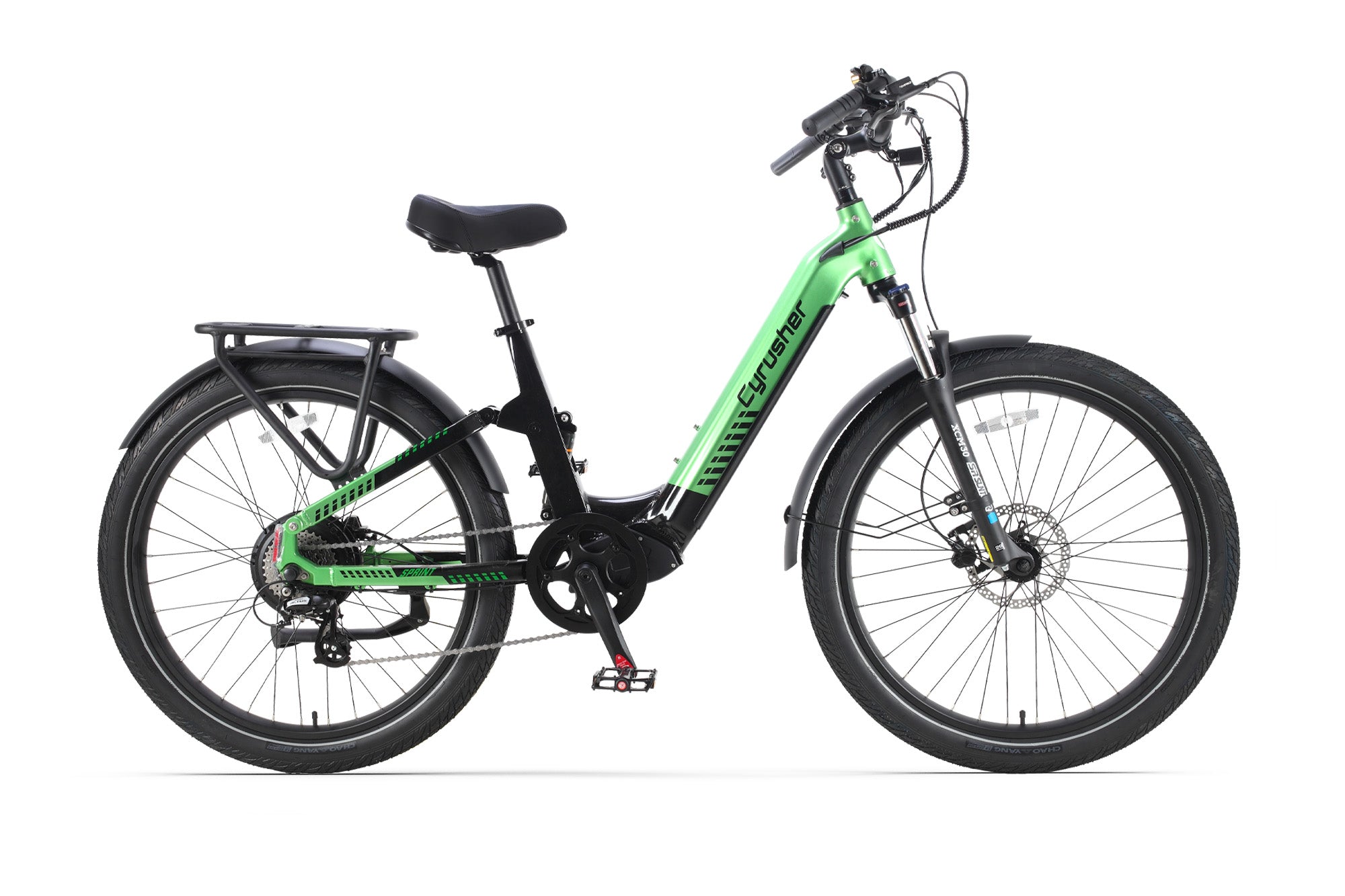
| Sprint | Comfortable city commuting | Step Thru | Full | 60 Miles | 750W | 70.5 lbs | 330 lbs | 5'7"–6'7" | |
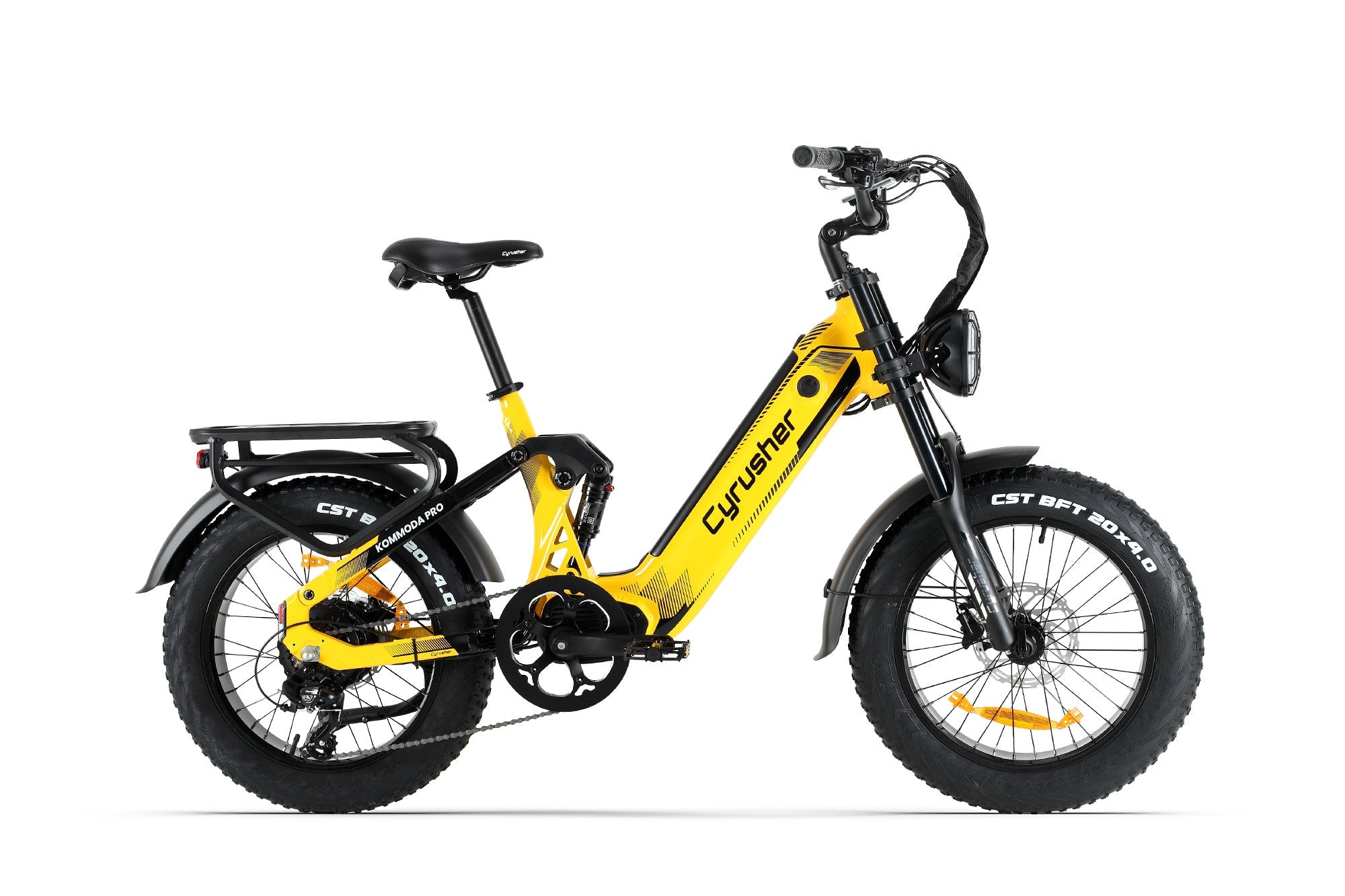
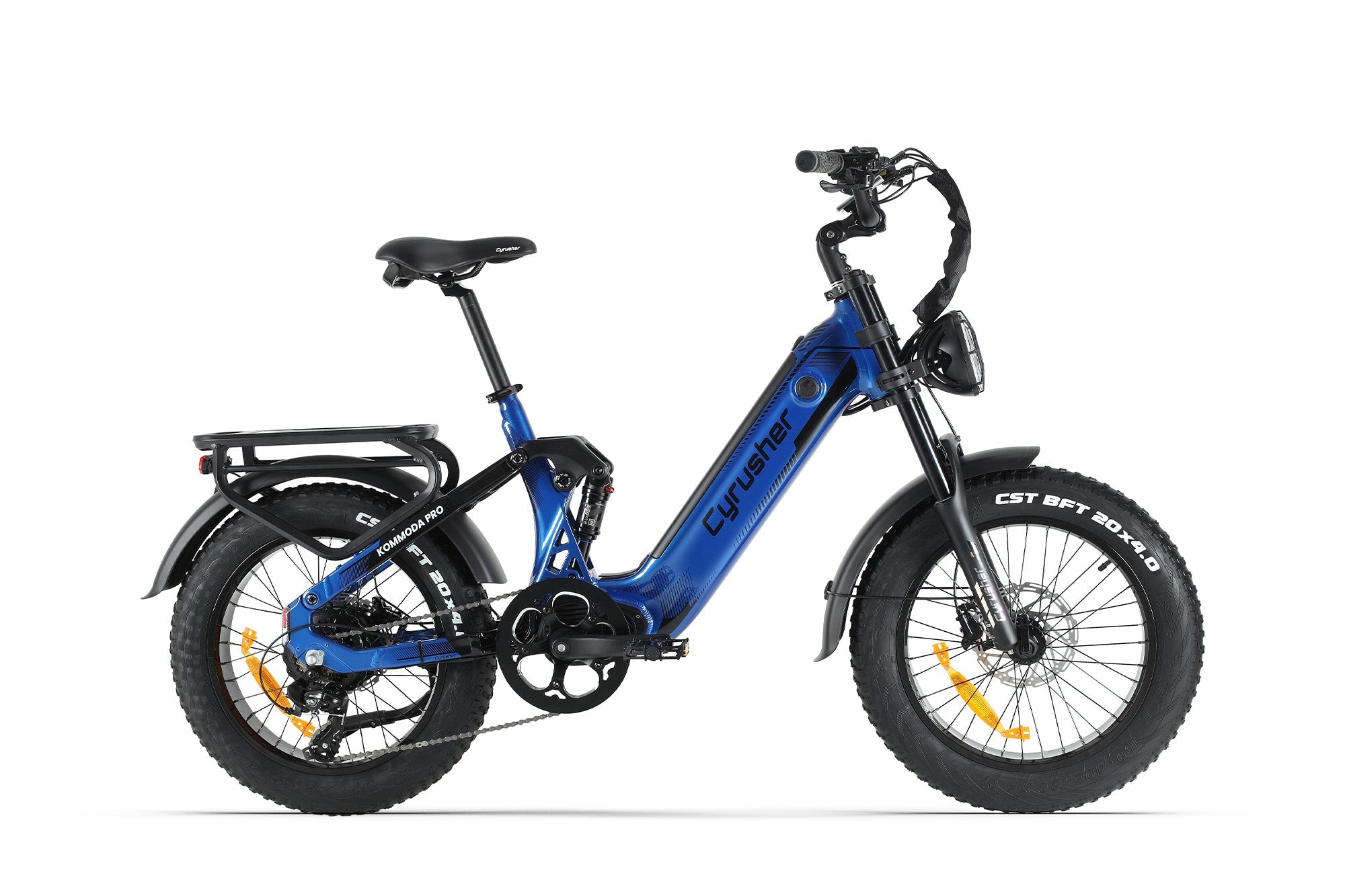
| Kommoda Pro | City-to-trail versatility | Step Thru | Full | 68 Miles | 750W | 85.98 lbs | 350 lbs | 5'1"–6'3" | $1,899.00 |
Published specifications are comparison points, not guarantees. Confirm the current suspension, fit, range, and weight on each product page.
What suspension changes
Front and rear suspension can help manage repeated bumps. The right tires, pressure, speed, setup, and fit still matter.
Helps soften impacts at the front wheel and reduce harshness through the handlebar.
Helps manage repeated bumps at the rear wheel and can improve comfort on rougher routes.
Tire volume and pressure influence traction, steering, comfort, and rolling resistance.
Suspension hardware and larger tires add weight. Confirm stairs, storage, racks, and vehicle-carrier limits.
Compare published height guidance, reach, saddle adjustment, frame access, and riding posture.
Use battery capacity and published range as comparison points, then account for load, hills, temperature, wind, and assist level.
Match the setup to the surface
Start with the routes you actually ride, then compare the complete bike rather than suspension alone.
Owner feedback, at the source
Link directly to the original review source so ratings and context remain verifiable.
I absolutely love the full suspension, it gives such a nice smooth ride.Gerald Wagner — Trax 2.0 owner, July 2025 Read on the Trax 2.0 page ★★★★★
All great components and fully adjustable shocks. I lock the rear shock on pavement to minimize bouncing when pedaling.Matt Crowley — Ranger 2.0 owner, November 2025 Read on the Ranger 2.0 page ★★★★☆
I have done a lot of research looking for the perfect electric bike and I finally opted for Cyrusher as the reviews have been very good.Julie W. — Sprint owner, April 2026 Read on the Sprint page
Before you choose
Direct answers for comparing comfort, weight, setup, range, and real-road use.
A full suspension e-bike pairs a front fork with a rear shock so both wheels track the ground independently. On the Trax 2.0 and Ranger 2.0 that means a hydraulic dual-crown fork with 60 mm of travel plus a DNM air shock; the Kommoda 3.0 runs an oil-spring fork with an air shock; the Cyclone X uses RockShox air suspension front and rear. Tires, pressure, frame fit, and setup still shape the ride, but the rear shock is what keeps the back wheel planted over washboard, roots, and potholes instead of bouncing through them.
For broken pavement, gravel, and light trail, yes — the rear shock absorbs the repeated impacts a rigid rear end sends straight into your spine, which matters on an 80 lb e-bike at 20+ mph. The honest trade-offs: full suspension adds weight and cost over front-suspension models like the Aura or Zenith, and a rear shock is one more component to set up and service. If your streets are genuinely smooth, a front-suspension model saves both.
Tires and suspension solve different problems. A 26×4″ fat tire at low pressure adds flotation and grip on sand, snow, and loose gravel; suspension controls bigger hits and keeps the wheels tracking. Most of this collection combines both — the Kommoda 3.0, Kommoda Pro, Trax 2.0, Rover, Ranger 2.0, and Roam pair 4-inch rubber with full suspension. The exceptions are deliberate: the Sprint (27.5×2.6″) trades flotation for easier rolling on city streets, and the Cyclone X (29″ front / 27.5″ rear, 2.6″ Maxxis) picks fast trail tires for its 60 lb carbon eMTB build.
Start with sag: in your riding gear, set the fork and shock so they compress roughly 20–30% of their travel under your weight — air units like the Trax 2.0's DNM shock or the Cyclone X's RockShox pair adjust with a shock pump, while coil models like the Sprint's MT-100 use preload. Use the lockout (the Trax 2.0 and Ranger 2.0 forks have one) for long smooth-pavement stretches. Each manual lists baseline settings by rider weight — worth five minutes, because a badly set shock rides worse than no shock.
Usually, yes — motor, battery, rear shock, and linkage add up. Published weights in this collection run from 60 lb for the carbon-framed Cyclone X, through 70.5 lb (Sprint) and 81.6 lb (Roam), to 83–87 lb for the Kommoda 3.0, Kommoda Pro, Trax 2.0, Rover, and Ranger 2.0. The weight disappears once the assist is moving, but plan for it when lifting onto a rack or up stairs. The comparison table above lists the published weight for every model side by side.
Both frame styles are here in full-suspension form, so easy mounting no longer costs you the rear shock. Step-through: Kommoda 3.0 (14.6″ standover, fits riders 4′9″–6′3″), Kommoda Pro, Roam, Sprint, and Trax 2.0. Step-over: Rover, Ranger 2.0 (fits 5′7″–6′6″), and the Cyclone X, where the full frame triangle adds stiffness for aggressive trail riding. Check each model's rider-height range in the comparison table rather than assuming by category.
Compare battery watt-hours first, then published range. The Trax 2.0 and Ranger 2.0 carry 52V 20Ah (1,040 Wh) packs rated up to 75 miles; the Kommoda Pro pairs the same 1,040 Wh with up to 68 miles; the Kommoda 3.0 is rated 68 miles from 960 Wh; the Rover and Roam 62 miles; the Sprint 60 miles; the Cyclone X 56 miles from 780 Wh. Real-world range drops with rider and cargo weight, hills, wind, cold, tire pressure, assist level, and throttle use — treat published figures as comparison points, not guarantees.
Use the test-ride page or contact an authorized dealer. Five minutes on the bike answers what a spec sheet can't: whether the standover clears in your everyday clothes, how the suspension settles under your actual weight, and how a bike of this weight feels leaning into a turn or lifting onto a rack. If no location is nearby, every e-bike includes a 30-day return window, and Cyrusher can authorize up to $200 of repairs at a local bike shop instead of shipping parts.
My road, my call
Compare the models, try a bike in person, or ask for help with fit, suspension, weight, range, and compatible parts.