
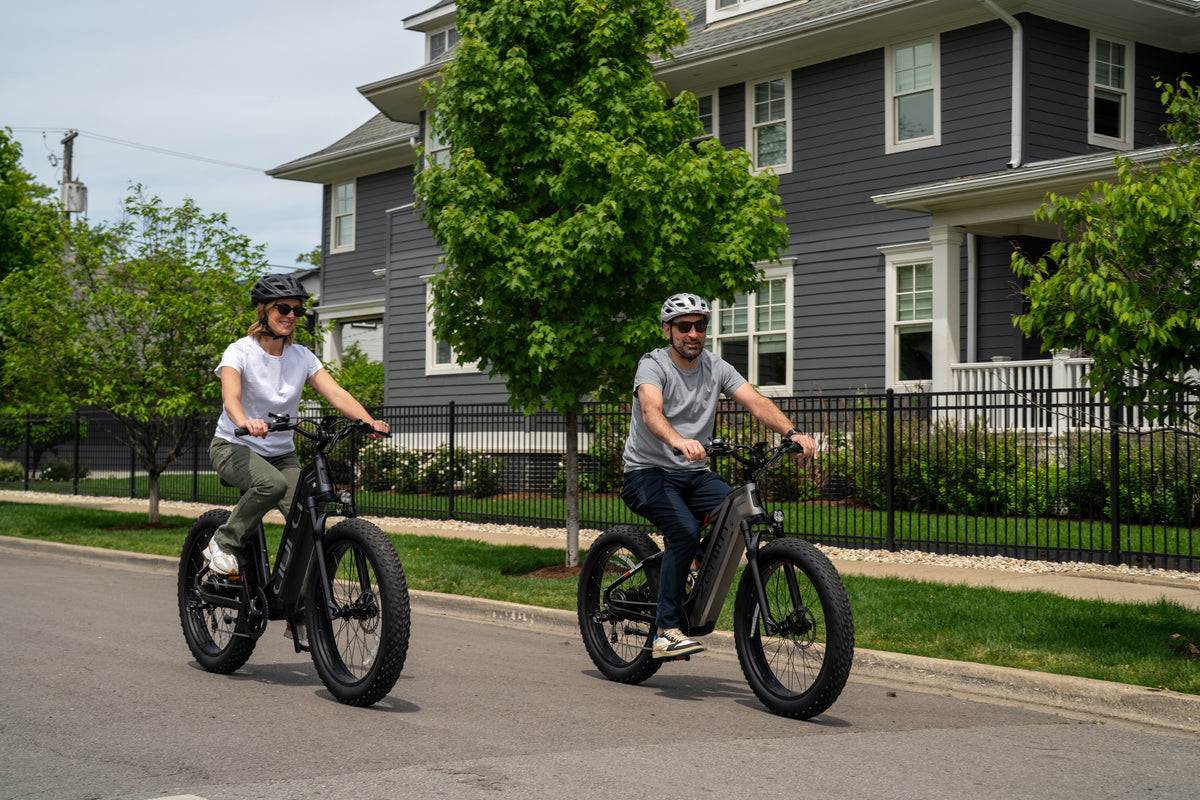
Your e-bike's tires play a bigger role in your riding experience than you might think. Whether you're commuting through city streets, exploring gravel trails, or heading out for a weekend adventure, the right tire pressure can make every ride more comfortable, stable, and efficient. However, tire pressure isn't something you can set once and forget. Temperature changes, rider weight, road conditions, and regular use can all affect how much air your tires need. The good news is that checking and adjusting tire pressure is a simple maintenance task that any e-bike owner can learn.
In this guide, we'll explain why tire pressure matters, how to find the right pressure for your e-bike, and how to check and adjust it step by step.

Why Is E-Bike Tire Pressure Important?
Tire pressure refers to the amount of air inside your tires. It is usually measured in PSI (pounds per square inch) or BAR. The correct pressure helps your tires support the combined weight of the bike, rider, and any cargo while maintaining their intended shape and performance.
Proper tire pressure affects several aspects of your ride.
Riding comfort: Tires help absorb small bumps and vibrations from the road. The right pressure can make your ride feel smoother without compromising stability.
Grip and handling: Correctly inflated tires maintain appropriate contact with the riding surface, helping you steer, corner, and brake with confidence.
Efficiency and battery range: Underinflated tires generally create greater rolling resistance, which can require more effort from you and more assistance from the motor. Maintaining suitable pressure can help your e-bike operate efficiently.
Tire lifespan: Both overinflation and underinflation can contribute to uneven wear or tire damage. Keeping your tires within the recommended pressure range helps protect your investment.
The goal isn't to inflate your tires as much as possible. It's to find the pressure that suits your particular tires, load, and riding conditions.
What Is the Right Tire Pressure for Your E-Bike?
There is no single tire pressure that works for every e-bike. The correct setting depends on your tire model, tire width, total load, and intended use. Start by checking the pressure information printed on the tire sidewall. Your e-bike owner's manual may also provide specific recommendations. Always follow the manufacturer's guidance and stay within the permitted pressure limits for your tire and rim.

Here is a simple guideline(Different ebikes are specific to the situation):
| Tire Type | Rcommended PSI |
|---|---|
| Fat Tires | 15-30 PSI |
| Commuter Tires | 40-65 PSI |
| Off-Road/Mountain Tires | 30-50 PSI |
Here are some factors to consider when choosing your tire pressure.
Tire Type
Different tires are designed for different riding conditions. Narrow commuter tires, mountain bike tires, and wide fat tires have different air volumes and pressure requirements. Fat tire e-bikes, including models with 20 × 4.0-inch or 26 × 4.0-inch tires, can often operate at lower pressures than narrower tires. Their larger air volume can help provide cushioning and traction on uneven surfaces. However, the correct pressure still depends on the specific tire and manufacturer's specifications.
Rider Weight and Cargo
Your tires must support the total weight of the bike, rider, and any luggage or accessories. A heavier load may require a higher pressure within the recommended range to prevent excessive tire deformation and reduce the risk of pinch flats.
Check both tires individually, as the front and rear wheels may carry different amounts of weight.
Riding Surface
Smooth pavement and rough trails place different demands on your tires. A suitable pressure for commuting may not be ideal for loose gravel or uneven dirt paths. Adjustments should always remain within the manufacturer's limits. Avoid choosing a pressure simply because it works for another rider or another e-bike.
Weather and Temperature
Air pressure changes with temperature. Cold weather can lower tire pressure, while warmer conditions can increase it. If you ride through changing seasons or store your e-bike in a cold garage, check your tires more frequently.
What Tools Do You Need?
Checking tire pressure doesn't require a complicated toolkit. A few basic items are enough:
Tire pressure gauge: A digital or analog gauge lets you measure pressure accurately.
Compatible bicycle pump: Choose a floor pump or portable pump that works with your tire valves.
Valve cap: This helps protect the valve from dirt and debris.
Most ebikes tires use either a Schrader valve, which resembles the valve found on car tires, or a Presta valve, which is narrower and commonly found on performance bicycles. Check which type your e-bike uses before purchasing a pump or gauge. Some pumps support both types, while others require a suitable adapter. (Most of our Cyrusher ebikes use Schrader valves.)
How to Check Your E-Bike Tire Pressure
Once you have the right tools, checking your tire pressure takes only a few minutes.
Step 1: Inspect your tires.
Before measuring pressure, look for cracks, cuts, embedded objects, unusual bulges, or visible damage. Check the tread and sidewalls carefully. If you notice significant damage, have the tire inspected before riding.
Step 2: Locate the valve.
Find the valve on the wheel and remove its cap. Identify whether it is a Schrader or Presta valve so you can connect your pressure gauge correctly.
Step 3: Attach the pressure gauge.
Connect the gauge firmly to the valve. Make sure the connection is secure to minimize air loss and obtain reliable reading.
Step 4: Read the pressure.
Check the number displayed on the gauge. Compare it with the recommended pressure for your tire and e-bike.
For the most consistent results, check your tires before riding, when they are cool. Tire pressure can increase as the tires warm up during use, so avoid releasing air based solely on a reading taken immediately after a ride.
Step 5: Check both tires.
Repeat the process for the front and rear tires. They may require different pressures depending on their specifications and the load they carry.
One important tip: Don't rely on squeezing the tire with your hands. A tire can feel firm while still being below its recommended pressure. A gauge provides a much more reliable measurement.

How to Adjust Your E-Bike Tire Pressure
After checking your tires, you may need to add or release air to reach the appropriate pressure.
How to Inflate an E-Bike Tire
If the pressure is too low, follow these steps:
- Remove the valve cap and connect your compatible pump securely.
- Add air gradually, checking the pressure gauge as you go.
- Stop when the tire reaches the appropriate pressure for your riding conditions, within the manufacturer's permitted range.
- Disconnect the pump carefully and check the pressure again if necessary.
- Replace the valve cap and repeat the process for the other tire.
Avoid inflating your tires beyond their permitted pressure. Overinflation can make the ride uncomfortable, reduce traction on some surfaces, and increase the risk of tire damage.
How to Release Air From an Overinflated Tire
If your tires are above the desired pressure, release air slowly.
- Remove the valve cap.
- Use the appropriate valve mechanism to release a small amount of air.
- Measure the pressure again with your gauge.
- Repeat until the pressure reaches the appropriate level.
- Secure the valve and replace the cap.
Avoid releasing too much air at once. Small adjustments make it easier to reach the desired pressure without accidentally underinflating the tire.
After adjusting both tires, take a moment to inspect them again before setting off.

How Riding Conditions Affect Tire Pressure
Once you understand the basics, you can make more informed adjustments for different types of riding.
City commuting: On smooth roads, an appropriate pressure can help balance rolling efficiency, grip, and comfort. Follow the tire manufacturer's recommendations rather than automatically choosing the highest permitted pressure.
Gravel and dirt trails: Uneven surfaces may benefit from a pressure that allows the tire to conform better to the ground, improving comfort and traction. However, pressure that is too low can increase the risk of rim impacts and pinch flats.
Fat tire adventures: Wide tires can provide a comfortable, stable ride on a variety of surfaces. Their pressure requirements vary considerably, so check the specific tire's recommendations before making adjustments.
Cold-weather riding: Check your tires when temperatures drop significantly. Recheck the pressure before riding rather than assuming the previous setting is still correct.
Carrying extra cargo: If you frequently carry bags, equipment, or other loads, account for the additional weight when setting your tire pressure. Never exceed the limits specified for your tires and wheels.
Remember that lower pressure isn't always better for comfort, and higher pressure isn't always better for speed. The right balance depends on your equipment and how you ride.
Common Tire Pressure Mistakes to Avoid
Even experienced riders can overlook basic tire maintenance. Avoid these common mistakes to keep your e-bike performing as intended.
Inflating by feel alone: A pressure gauge provides a more accurate reading than squeezing the tire.
Ignoring the manufacturer's recommendations: Never assume that another bike's pressure settings will work for yours.
Overinflating for speed: Excessive pressure can reduce comfort and grip, depending on the tire and surface.
Riding with underinflated tires: Low pressure can increase rolling resistance, tire deformation, and the risk of damage.
Ignoring repeated pressure loss: A tire that frequently loses air may have a puncture, a leaking valve, or a damaged inner tube.
Adjusting pressure when tires are hot without accounting for temperature: Allow tires to cool before making routine pressure adjustments for a consistent baseline.
If a tire repeatedly loses pressure after inflation, inspect it for visible damage and check the valve. If you cannot identify the cause, consult a bicycle mechanic.
How Often Should You Check Your E-Bike Tire Pressure?
For regular riders, checking tire pressure at least once a week is a useful starting point. You should also check it before long rides, after extended periods of storage, and whenever temperatures change significantly. If you ride frequently, carry heavy loads, or use tires that require more precise pressure management, you may need to check them more often. It's also a good idea to combine tire pressure checks with a quick pre-ride inspection. Look at your brakes, wheels, lights, and tire condition before heading out. A few minutes of maintenance can help you identify small problems before they become bigger ones.

Conclusion
Proper tire pressure is a small detail that can make a meaningful difference to your e-bike experience. It helps support comfortable riding, reliable handling, efficient rolling, and longer tire life. To keep your e-bike ready for your next adventure, remember three simple steps: check your tire pressure regularly, adjust it according to your tire specifications and riding conditions, and inspect your tires for signs of damage. Whether you're commuting to work, exploring country roads, or riding off the beaten path on a fat tire e-bike, good tire maintenance helps you get more out of every journey.
FAQ
1. Can I use a regular bicycle pump for my e-bike tires?
Yes. A regular bicycle pump can work as long as it is compatible with your tire valve and can provide the pressure your tires require. A pump with a built-in pressure gauge makes adjustments easier.
2. Should my front and rear tires have the same pressure?
Not necessarily. The two wheels may carry different loads, and their recommended pressures can vary. Follow the tire and bike manufacturer's guidance for each wheel.
3. What happens if my e-bike tires are underinflated?
Underinflated tires can increase rolling resistance, reduce handling precision, and make the tires more vulnerable to pinch flats or rim impacts. They may also require more energy to keep the bike moving.
4. Can I inflate my fat tire e-bike tires to the maximum PSI?
The maximum permitted pressure is a limit, not necessarily the ideal target for every ride. Choose a suitable pressure based on your specific tires, load, riding surface, and manufacturer's recommendations.
5. Why does my e-bike tire keep losing air?
Possible causes include a puncture, a damaged inner tube, a leaking valve, or an issue with the tire seal. Inspect the tire carefully and seek professional assistance if the pressure continues to drop.


Share:
Black Friday E-Bike Buying Guide 2026: How to Get the Best Deal Without Regrets